Hydroacoustics for education and research
The task: learn hydroacoustics by doing
Underwater communication and navigation are an important part of modern marine robotics, instrument making and applied science. In practice, such solutions are often too expensive for teaching, hard to put into use or closed to deep engineering work. Universities and research groups need something different: affordable devices that work out of the box, detailed documentation, open protocols and source code, so that a student can get from theory to his or her own algorithms.
Such tasks arise in curricula, clubs, student projects and marine and underwater robotics competitions, in laboratory and field test rigs, and in research and development. UCNL equipment is open for these purposes: specifications, user manuals, interface protocols, application source code on GitHub and technical data sheets are available.
Which UCNL systems are used, and why
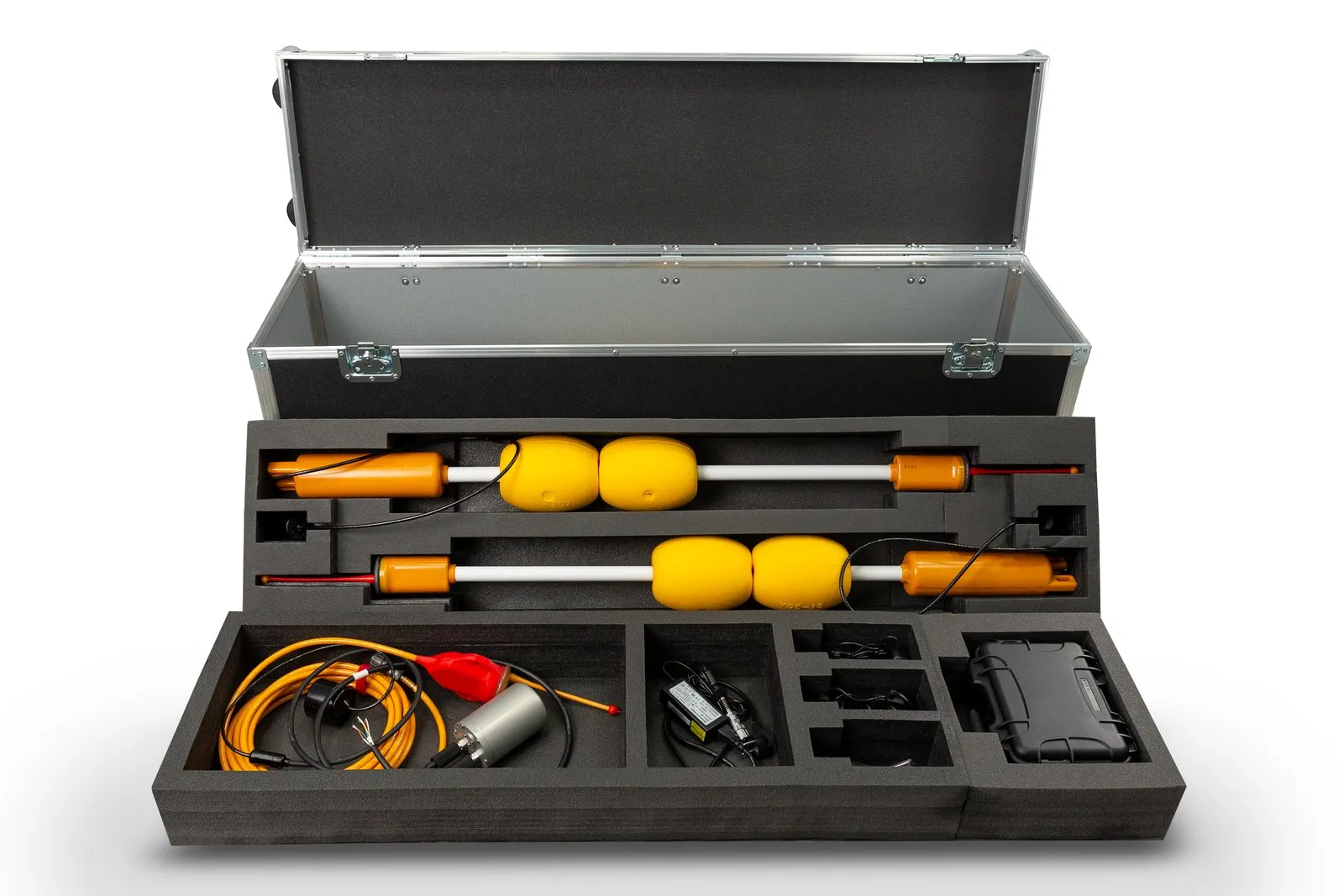
WAYU: a teaching system for tracking underwater objects
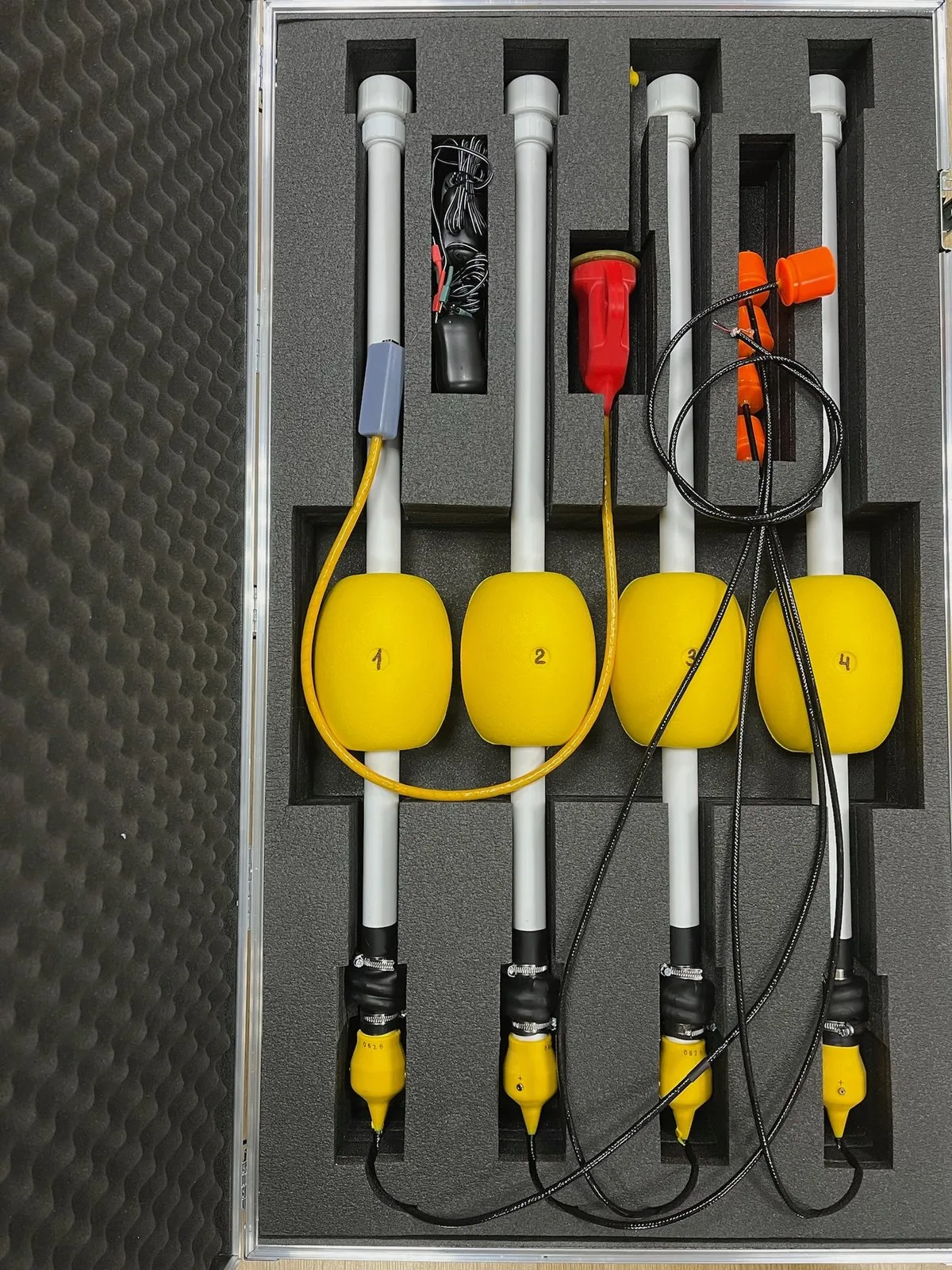
WAYU (Where Are You Underwater) was created for educational tasks. The user places a WAYU Pinger beacon on the object to be positioned — an ROV, AUV or diver — and four small WAYU GIB buoys on the water. The object's position appears on a PC in the open-source WAYU application. The distance between the buoys is 30 to 300 m, the pinger emits a signal every 2 seconds and works at depths of up to 100 m. The pinger and buoys switch on in water and need no setup or calibration, and the position is passed to any mapping software over NMEA0183. The system records a track and determines the object's heading.
WAYU is intended exclusively for educational projects — teaching programs and underwater robotics competitions. For working tasks, use the other UCNL systems: Zima2, RWLT and RedWave.
ACubes and uSwitch: a construction kit and a simple modem
ACubes ("Acoustic Cubes", A3S) is a construction kit of A3T transmitter and A3R receiver modules. The modules convert a digital signal to an acoustic one and back, while the user writes the application algorithms — navigation, error-correcting coding, networking. One transmitter and up to 12 receivers can be stacked together, and the modules can be assembled into modems, antenna arrays, USBL, LBL and VLBL systems, and telecontrol and monitoring systems. There are three standard kits, including an analogue of the WAYU system. In the Habr article Hydroacoustic "cubes" the kit is driven by an Arduino Nano board.
One teaching experiment is a sound-source direction-finding system: four A3R receivers 1 m apart, one A3T transmitter, two Arduino Nano boards and a frame made of polypropylene pipes. In a small pool, the mean angle error was about 6°.
uSwitch is a simple, affordable hydroacoustic modem for short distances: 32 bit/s data rate, signal propagation time measurement and switch-on by water contact. It is suited to trying out network algorithms and prototyping navigation and telecontrol systems, and it can serve as the pinger of the WAYU system.
uWave: communication for rigs and research projects
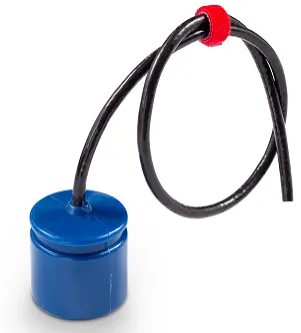
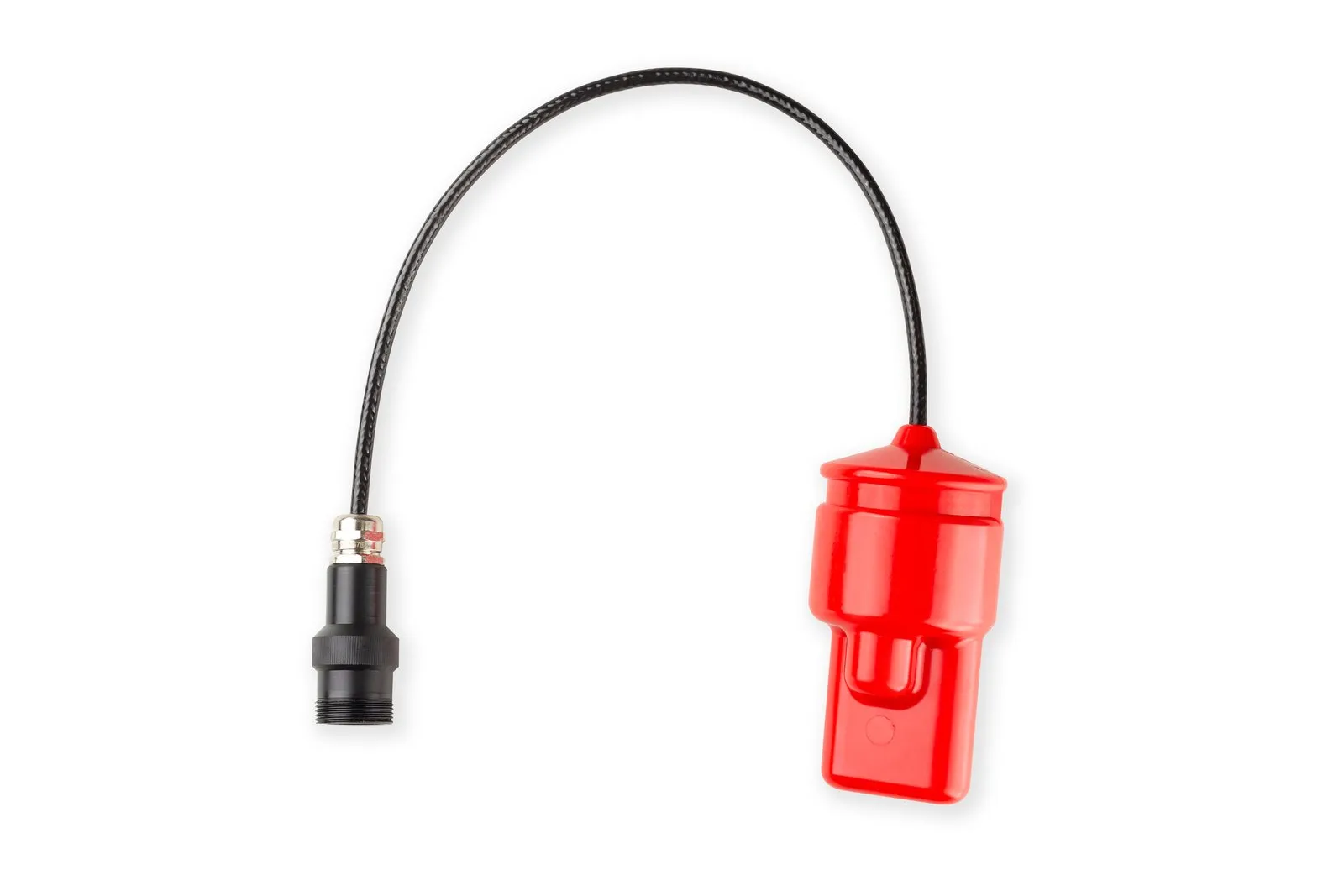
uWave modems, 41×45 mm and 0.16 kg, work at ranges of up to 1,000 m. Right after switch-on a transparent channel is available — just connect the modem to a serial port — and the configuration protocol is NMEA-like and open. The open uWaveLib (.NET) and uWave ALibs (Arduino) libraries let you build a modem into your own project quickly. uWave USBL combines data transmission with measuring the bearing and range to its counterpart, so it is convenient for practising both communication and navigation.
A customer's feedback describes a research project on distributed 3D environmental sensing with a team of underwater robots: uWave modems were planned for AUV telemetry and the Zima system for tracking them (read the feedback).
Zima2 and RWLT: navigation for research
To practise navigation, positioning and tracking algorithms in real conditions, Zima2 and RWLT are used. Their console applications are open, the position is passed to third-party software and tracks are saved; Zima2 also sends telecontrol commands to underwater objects and receives telemetry.
A typical workflow
- Choose the level of the task: a club or a laboratory, learning the basics or developing your own algorithms.
- Start with a ready-made system (WAYU) or with a construction kit (ACubes, uSwitch) if you want to build your own.
- Connect to a PC or an Arduino board: the position is passed over NMEA0183, and open libraries are available for the modems.
- Run experiments in a pool, a pond or a lake, record tracks and compare them with calculations.
- When needed, move on to professional-class systems — Zima2, RWLT, RedWave — built on the same principles.
Materials and next steps
Descriptions of educational projects, specifications and user manuals are collected on the documentation page. Related products are in the catalog: educational products, data transmission and navigation. For short experiments you can rent equipment, and for non-standard research tasks comprehensive engineering can help.
Systems for this task

Devices for this task
ACubes (A3S)
uSwitch
uWave
uWave USBL
Related articles
The world's smallest hydroacoustic modem
Connecting the uWave underwater acoustic modem to Arduino
“Underwater GPS” with two transceivers
How to Choose an Underwater Acoustic Modem
Underwater Navigation: How USBL, LBL and iLBL Work and How They Differ
Underwater Navigation Glossary: USBL, LBL, Pinger, Transponder and More Terms
Build a teaching rig or a research setup