To choose an underwater acoustic modem, compare eight parameters: range, data rate, depth rating, power consumption, size, interfaces, number of nodes and navigation functions. No modem wins on all of them at once: physics ties range to data rate (the farther the link, the slower it is; see Underwater acoustic communication: how data travels underwater), and size and power are tied to both. So start with the task: what you transmit, how often, over what distance and from which platform.
| Task | What matters most | What to consider |
|---|---|---|
| Telemetry and commands for AUVs and ROVs | range, interface, size | uWave, uWave Max |
| Network of seabed sensors | power consumption, number of nodes | uWave Max, RedLine |
| Actuator control, acoustic release | reliability, range, code commands | RedGTR |
| Data plus the partner's position at once | navigation functions | uWave USBL |
| Embedding in your own housing | size, interface | uWave Max OEM |
Selection criteria
1. Range
The stated range is a maximum under favorable conditions: calm water, line of sight, weak echo. In a shallow water body, with propeller noise and near the surface, the real range is noticeably shorter, so leave a margin. Compare figures for the same mode and the same pair of modems: for uWave Max, uWave Max OEM and uWave USBL, 3,000 m is reached when they work with each other in the 78 bit/s mode, while with standard uWave modems the link is possible at 1,000 m.
2. Data rate and delay
Estimate your data volume. A 64-byte packet at 78 bit/s takes about 7 seconds, and propagation delay adds 0.67 s per kilometer. That is enough for coordinates, depth, telemetry and commands, but not for video. The uWave Max speed modes (78, 156, 314 and 634 bit/s) are mutually incompatible and are switched by replacing the firmware, so every modem in a network must run in the same mode.
3. Depth rating
For uWave Max, uWave USBL and RedGTR it is 300 m; for RedLine (according to the documentation) and for the uWave Max OEM transducer it is 400 m. Check the depth rating of the specific version, and remember that it describes the housing, not the communication range.
4. Power consumption
Look separately at receive (Rx), transmit (Tx) and standby. A modem spends most of its time listening, so Rx determines endurance. Example: uWave Max draws 0.33 W in receive mode, so a 12 V × 10 Ah battery (120 Wh) lasts about 360 hours, or 15 days of continuous listening. While transmitting the modem draws 15 W, so the real endurance depends on the transmit duty cycle.
5. Size and weight
The compact uWave measures 41 × 45 mm and weighs 0.16 kg; uWave Max, RedLine and RedGTR measure 64 × 62 mm and weigh 0.36 kg. If the modem must be built into your own housing, look for an OEM version: uWave Max OEM is an 80 × 43 × 29 mm board weighing 54 g plus a separate transducer.
6. Interfaces and integration
uWave family modems connect over UART at 9600 bit/s (0…3.3 V levels), use an NMEA-like protocol and provide a transparent channel right after power-on. For a long cable run there is the uWire cable with a UART-RS422 converter. Open-source libraries are available for integration: uWaveLib (.NET) and uWave ALibs (Arduino); how to use them is described in Connecting the uWave underwater acoustic modem to Arduino.
7. Number of nodes
How many nodes will the network have, and must they talk at the same time? In uWave, nodes are separated by code (up to 20 channels), and the packet mode offers 254 logical addresses, delivery acknowledgment and broadcast messages. RedGTR supports 25 subscribers and 40 code commands. For networks of dozens of nodes with internet access, look at the dual-medium access point.
8. Navigation functions
A modem measures the signal propagation time, and therefore the distance to its partner: the time resolution of uWave Max is 0.0001 s, which is 0.15 m in range. It can also query the depth, temperature and supply voltage of remote modems. If you need the angle as well, choose uWave USBL: the nominal horizontal angle-of-arrival accuracy is 2° (static laboratory experiment, without multipath). Positioning principles are covered in Underwater navigation: how USBL, LBL and iLBL work and how they differ.
The UCNL modem range
Data are taken from the device descriptions on this site and from the documentation at docs.unavlab.com.
| Model | Range | Data rate, bit/s | Rx/Tx, W | Dimensions and weight |
|---|---|---|---|---|
| uWave | 1,000 m | 78 | 0.33/6 | 41 × 45 mm, 0.16 kg |
| uWave Max | 3,000 m* | 78/156/314/634 | 0.33/15 | 64 × 62 mm, 0.36 kg |
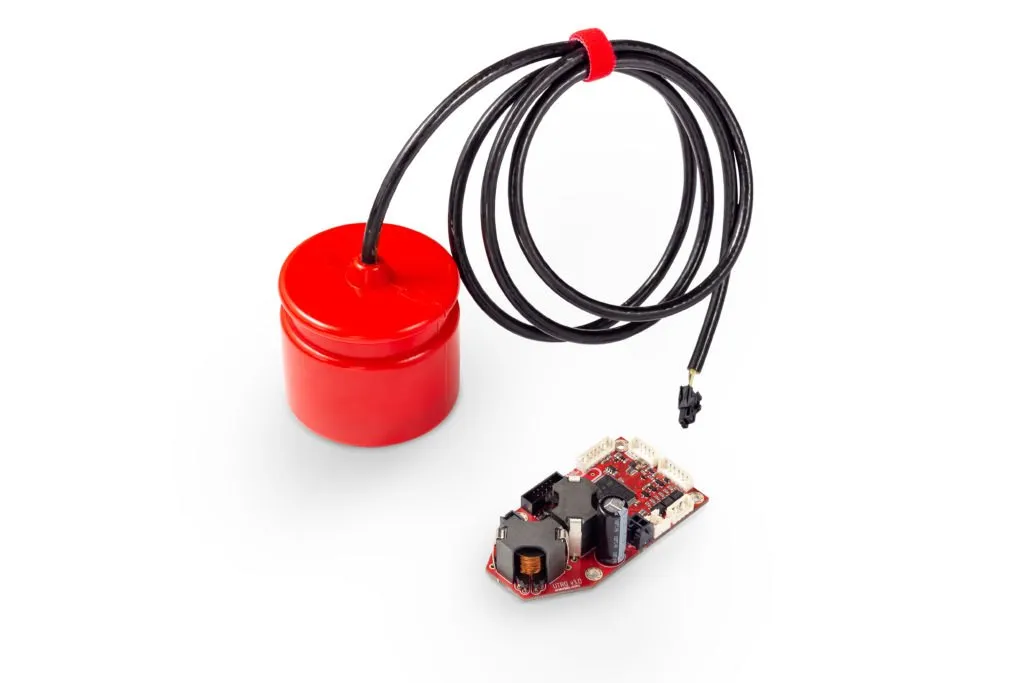
| uWave Max OEM | 3,000 m* | 78/156/314/634 | 0.33/15 | board 80 × 43 × 29 mm, 54 g; transducer 64 × 62 mm, 360 g |
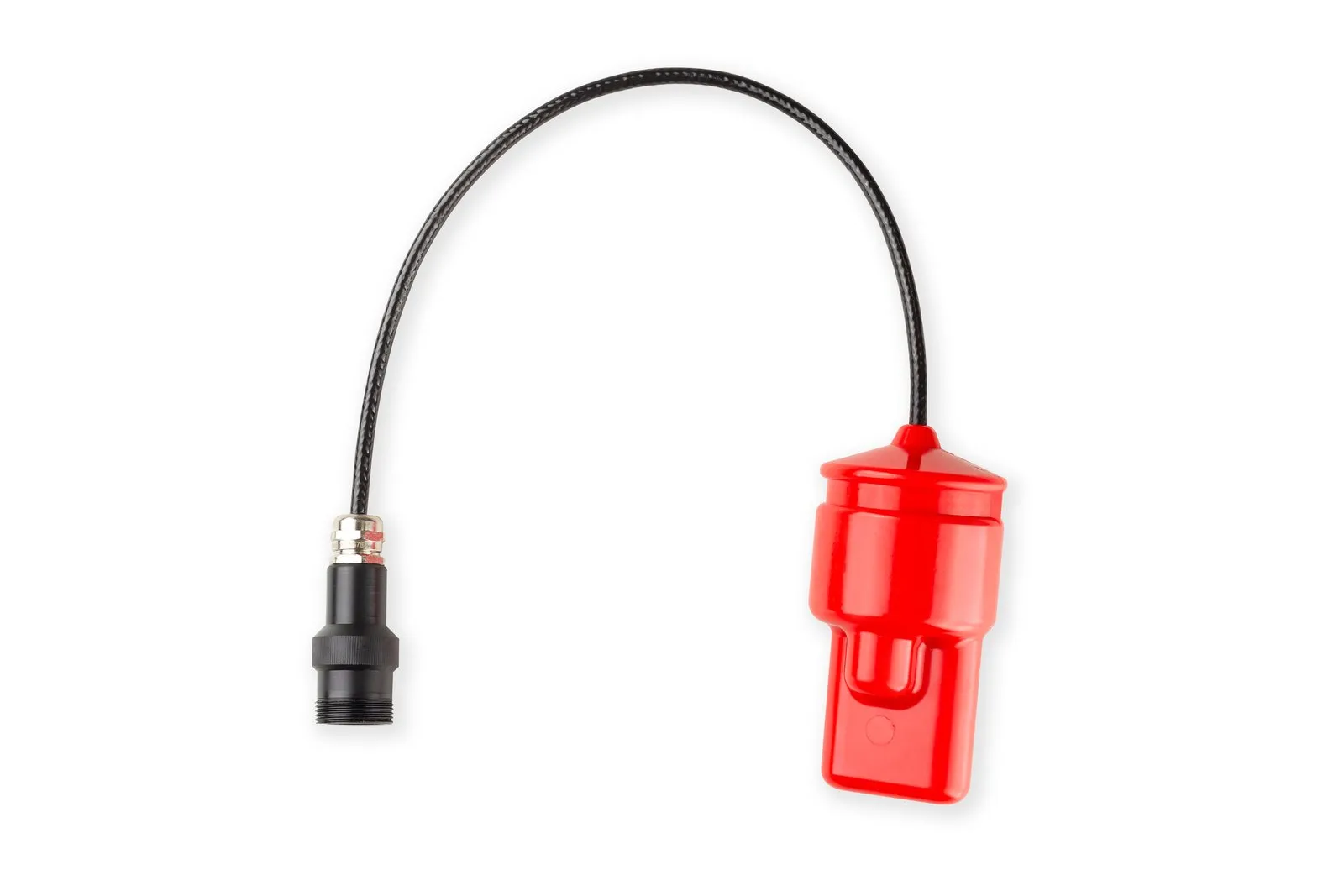
| uWave USBL | 3,000 m* | 78/156/314 | 0.33/10 | 64 × 128 mm, 0.44 kg |
| RedLine | 8,000 m | 80 | 0.33/10 | 64 × 62 mm, 0.36 kg |
| RedGTR | 8,000 m | code commands | 0.33/25 | 64 × 62 mm, 0.36 kg |
* When working with another uWave Max, uWave Max OEM or uWave USBL in the 78 bit/s mode; with standard uWave modems, 1,000 m.
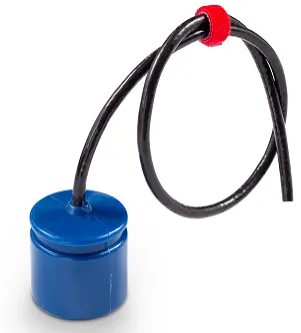
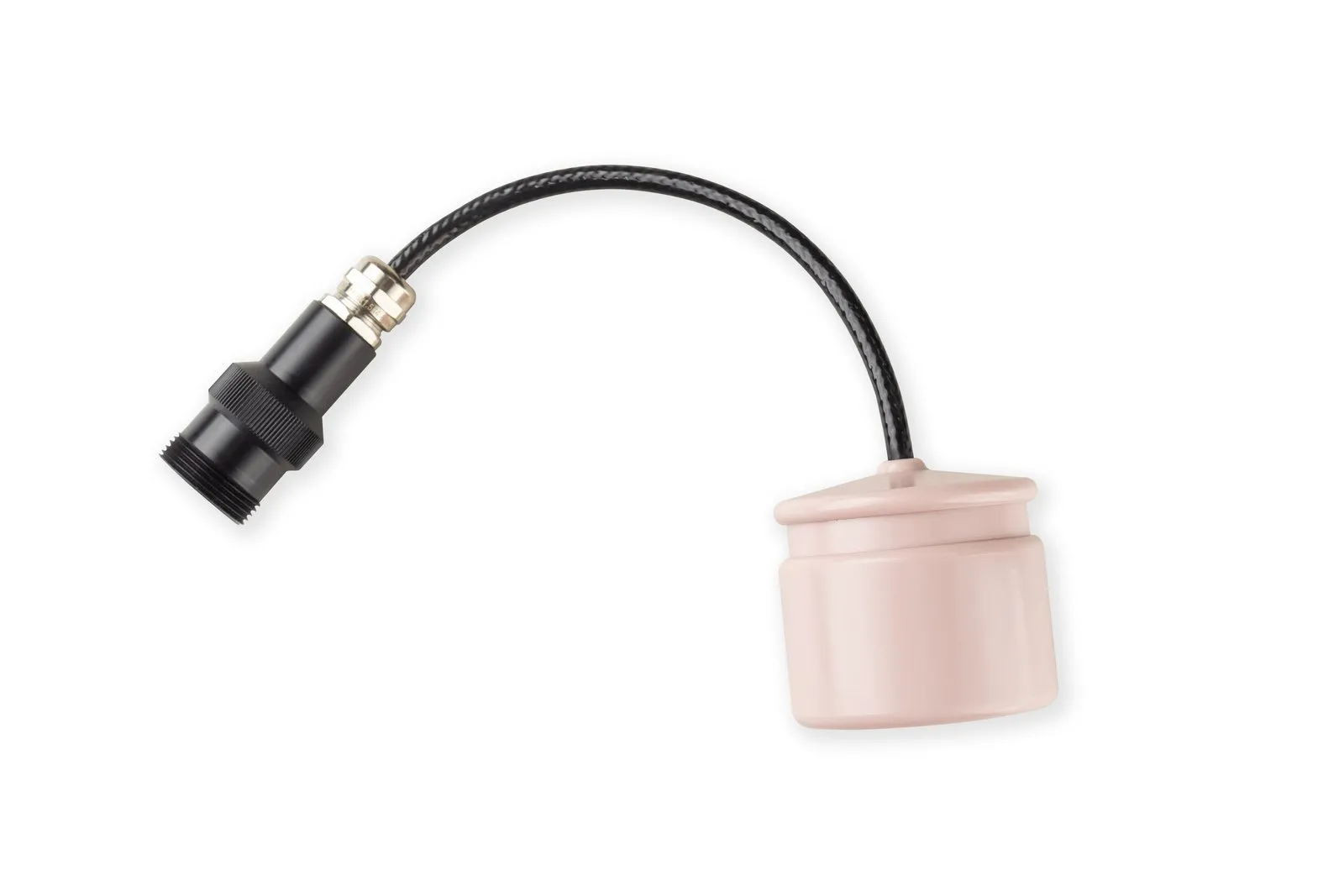
How the models differ. uWave is the most compact and simplest: a transparent channel right after power-on, 300 m depth rating and a built-in depth and temperature sensor. uWave Max extends the range to 3,000 m, and the OEM version provides the board and transducer (400 m depth rating) without a housing and without a depth sensor. uWave USBL also measures the signal's angle of arrival, and its built-in inclinometer compensates roll and pitch of up to ±30°. All uWave modems offer 20 code channels and 254 logical addresses. RedLine is designed for a range of 8,000 m at 80 bit/s, works in the 5–15 kHz band at depths of up to 400 m, has 20 code channels and can relay messages. RedGTR sends 40 code commands to 25 subscribers at depths of up to 300 m and is intended for controlling actuators and acoustic releases.
Comparison with foreign alternatives, based on published data
Below are the specifications that manufacturers publish on their own pages. The data were checked on 30 September 2026. Conditions are not stated in the same way everywhere: EvoLogics and Popoto note that their figures refer to optimal conditions, and for UCNL the maximum range is given for the 78 bit/s mode. The tables therefore show stated specifications, not the results of comparative tests. The device classes also differ, from a miniature modem weighing 40 g to PRO-series modems in a 110 mm diameter housing with Ethernet.
| Model | Range | Data rate | Depth rating |
|---|---|---|---|
| Water Linked Modem M16 | 1,000 m | 10 bit/s (16-bit packet of 1.6 s duration), half duplex | 600 m |
| Water Linked Modem M64 (retired) | 200 m (2019 datasheet) | 64 bit/s | 300 m |
| EvoLogics PRO 7/17 (formerly S2C R 7/17) | 8,000 m at up to 6.9 kbit/s | up to 6.9 kbit/s | 200–6,000 m, depending on housing |
| EvoLogics PRO 18/34 (formerly S2C R 18/34) | about 2,000 m (typical average range) | up to 13.9 kbit/s | 200–2,000 m, depending on housing |
| Popoto S1000RP | 1–4 km | 80 bit/s (FH-FSK), 640–10,240 bit/s (PSK) | 1,000 m |
| Popoto PMM5544 (OEM board) | 1–8 km (with PMT-28 transducer) | 80–10,240 bit/s | — |
| UCNL uWave Max | 3,000 m | 78–634 bit/s | 300 m |
| UCNL RedLine | 8,000 m | 80 bit/s | 400 m |
| Model | Dimensions and weight | Power | Interface |
|---|---|---|---|
| Water Linked Modem M16 | Ø 29.5 × 47 mm, 40 g | 3.0–4.2 V (UART) or 10–30 V (RS-422); transmit under 1.5 W, receive under 0.3 W | UART or RS-422 |
| Water Linked Modem M64 | 30 × 112 mm, 92 g | 10–18 V | UART |
| EvoLogics PRO 7/17 | Ø 110 × 178 mm, length 322 mm, 4,700 g* | 12 or 24 V; receive 0.8 W, transmit up to 45 W | Ethernet or RS-232 (RS-422 on request) |
| EvoLogics PRO 18/34 | Ø 110 × 178 mm, length 265 mm, 2,500 g* | 12 or 24 V; receive 0.8 W, transmit up to 65 W | Ethernet or RS-232 (RS-422 on request) |
| Popoto S1000RP | 315 × 49 × 49 mm, 800 g | receive 1.5 W; deep sleep under 45 mW | Ethernet, RS-422, RS-232 |
| Popoto PMM5544 | 90 × 60 × 50 mm, 500 g | 8.5–36 V; receive 1.5 W | Gigabit Ethernet, RS-422, RS-232 |
| UCNL uWave Max | Ø 64 × 62 mm, 0.36 kg | 5–12 V; receive 0.33 W, transmit 15 W | UART, NMEA 0183 PUWV |
| UCNL RedLine | Ø 64 × 62 mm, 0.36 kg | 12 V; receive 0.33 W, transmit 10 W | UART, NMEA 0183 PTNT |
* Reference values given by the manufacturer for a Delrin housing without an internal battery; other builds are larger and heavier.
Sources (checked on 30 September 2026):
- Water Linked Modem M16: product page, documentation.
- Water Linked Modem M64: documentation (the modem is marked as retired), datasheet W-MK-19009-1 of 19 February 2019 (a Water Linked document hosted on a reseller's site).
- EvoLogics: PRO 7/17, PRO 18/34.
- Popoto Modem: modem catalog, specifications for the S1000RP and PMM5544.
- UCNL: device pages on this site and the documentation.
How to check your choice
Before buying, test a pair of modems in your own water: multipath and noise depend on the site, and the echo in a tank, a pool or a shallow bay is very different from open water (an example is given in the article on the principles of underwater acoustic communication). Three typical mistakes:
- relying on the maximum range without checking in which mode and with which partners it is reached;
- not calculating the energy budget with the transmit duty cycle;
- mixing modems with incompatible speed modes in one network.
UCNL equipment
All models are collected on the Data transmission page. If in doubt, describe your task: range, depth, number of nodes and platform. Our engineers will tell you whether uWave, uWave Max, RedLine or RedGTR fits, and which mode to choose. For educational projects and prototypes there is the simple uSwitch modem. The story of the compact uWave and its field trials is in The world's smallest hydroacoustic modem, and communication with divers is covered in How divers communicate underwater.