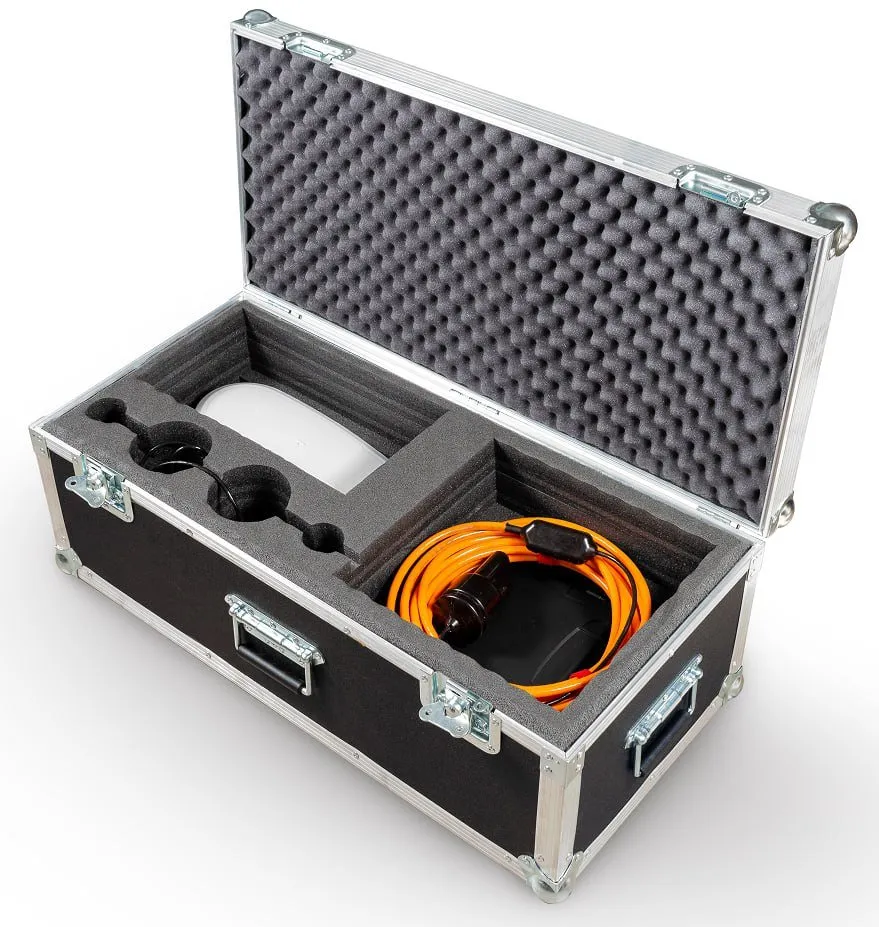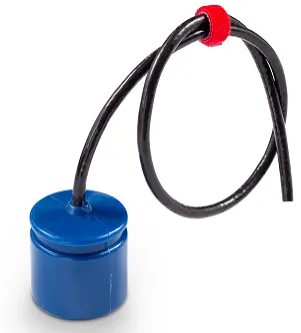
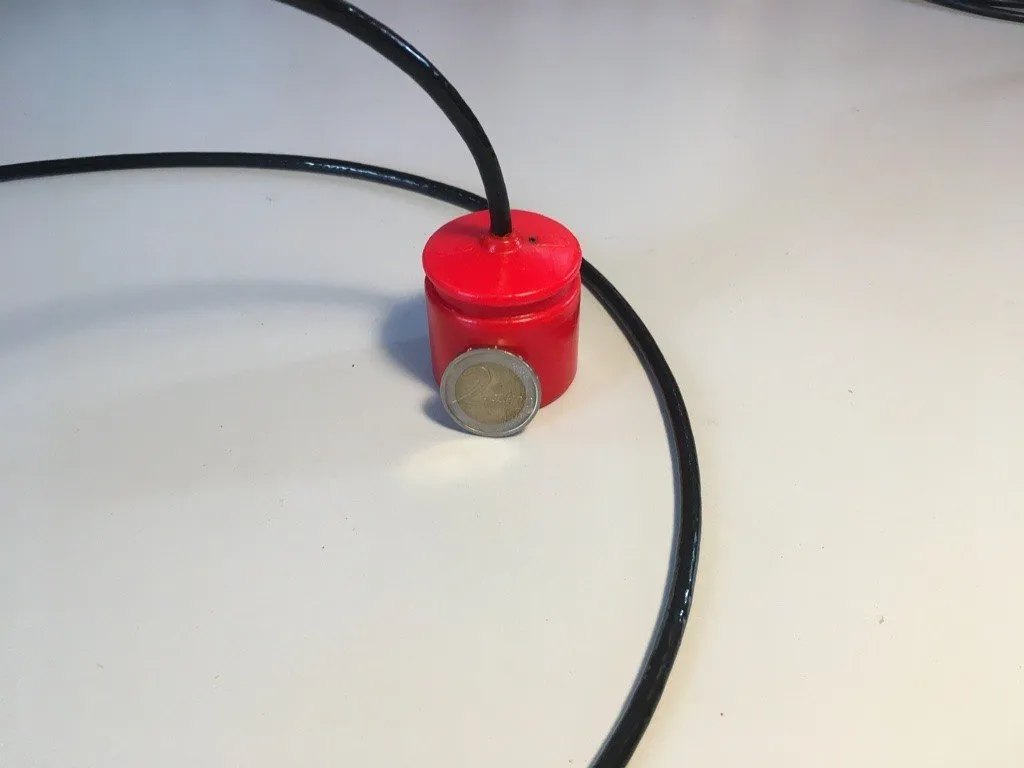
The device provides digital hydroacoustic communication between 20 nodes within a 1000-meter radius, using both a coded mode and a transparent-channel mode.
Key features of the uWave modem:
- Extremely small size and weight
- Can be used in wireless underwater sensor networks
- Reliable data transfer at 78 bit/s
- Communication range of up to 1000 m
- Code-division multiplexing of nodes
- Signal propagation time measurement
- Highly reliable digital hydroacoustic communication
- Low power consumption (Rx/Tx): 0.33/6 W
- Open interfacing protocol
- Built-in pressure/temperature sensor
- Our device is priced at roughly one-sixth of its closest analog — just $480!
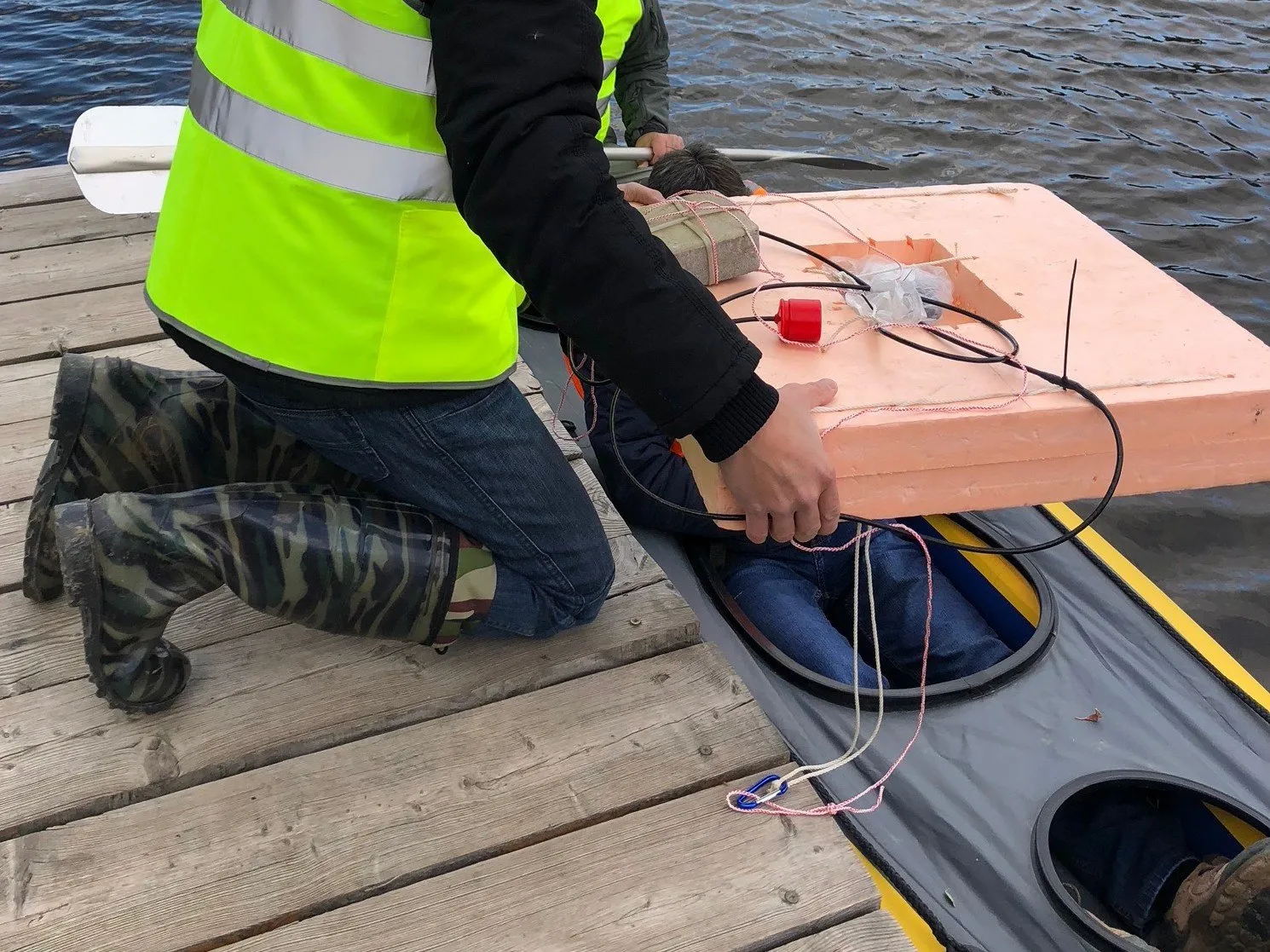
We recently field-tested our modem in an open body of water — Yuzhny Pond in Volgograd, with a depth of 1.5–2 m.
The “beacon” was mounted on a small raft made of rigid foam insulation and powered by a power bank:
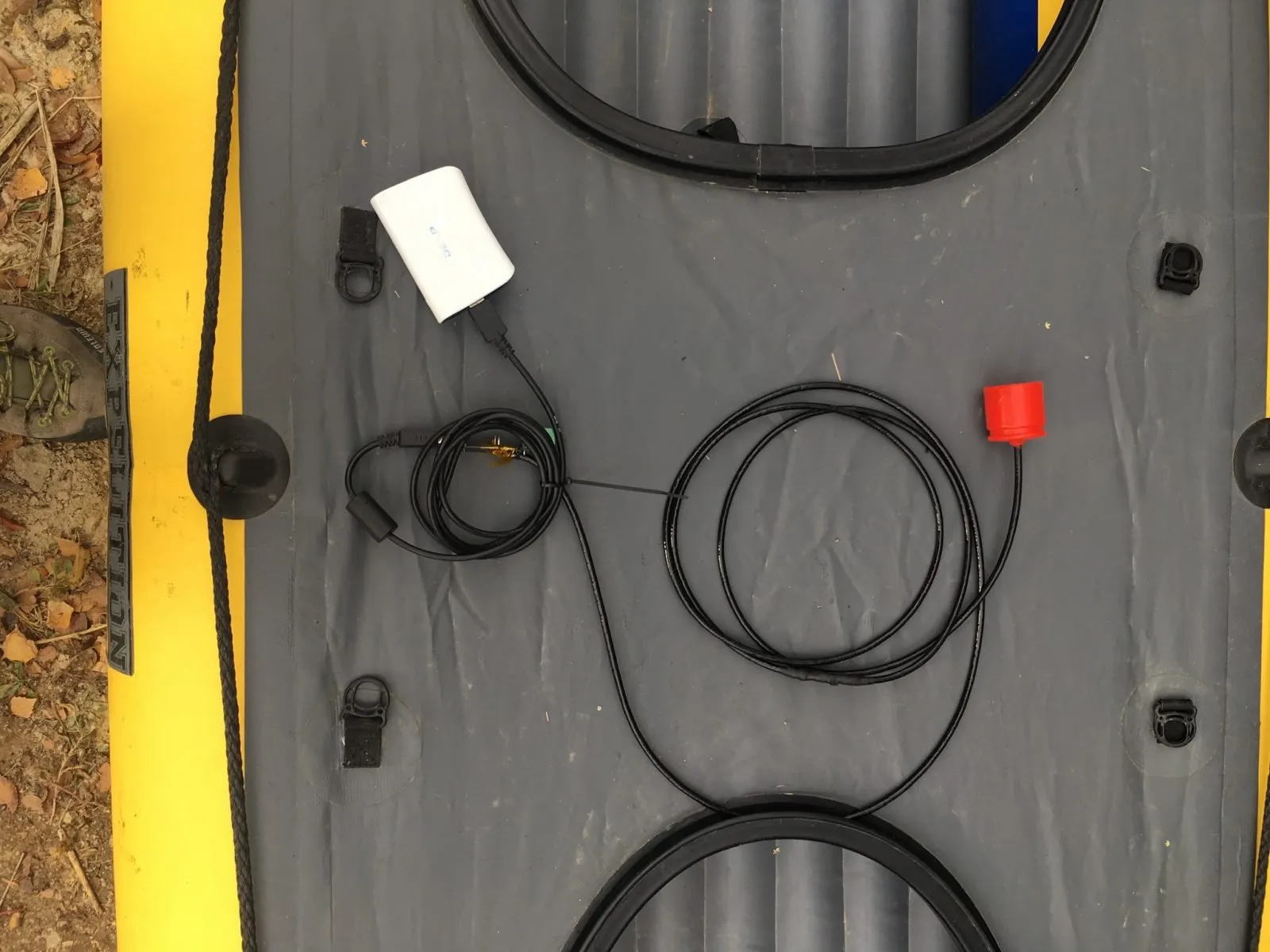
To demonstrate its capabilities, we built a navigation system from two modems, based on the virtual long-baseline principle, and got a deviation from land-based GPS of less than a meter
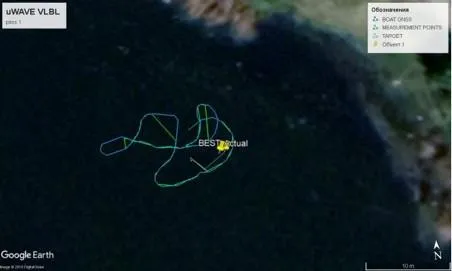
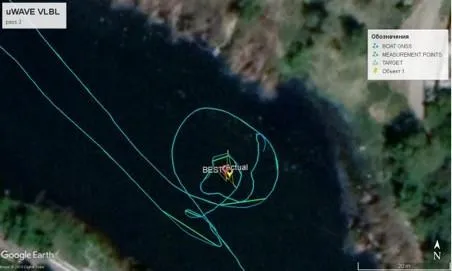
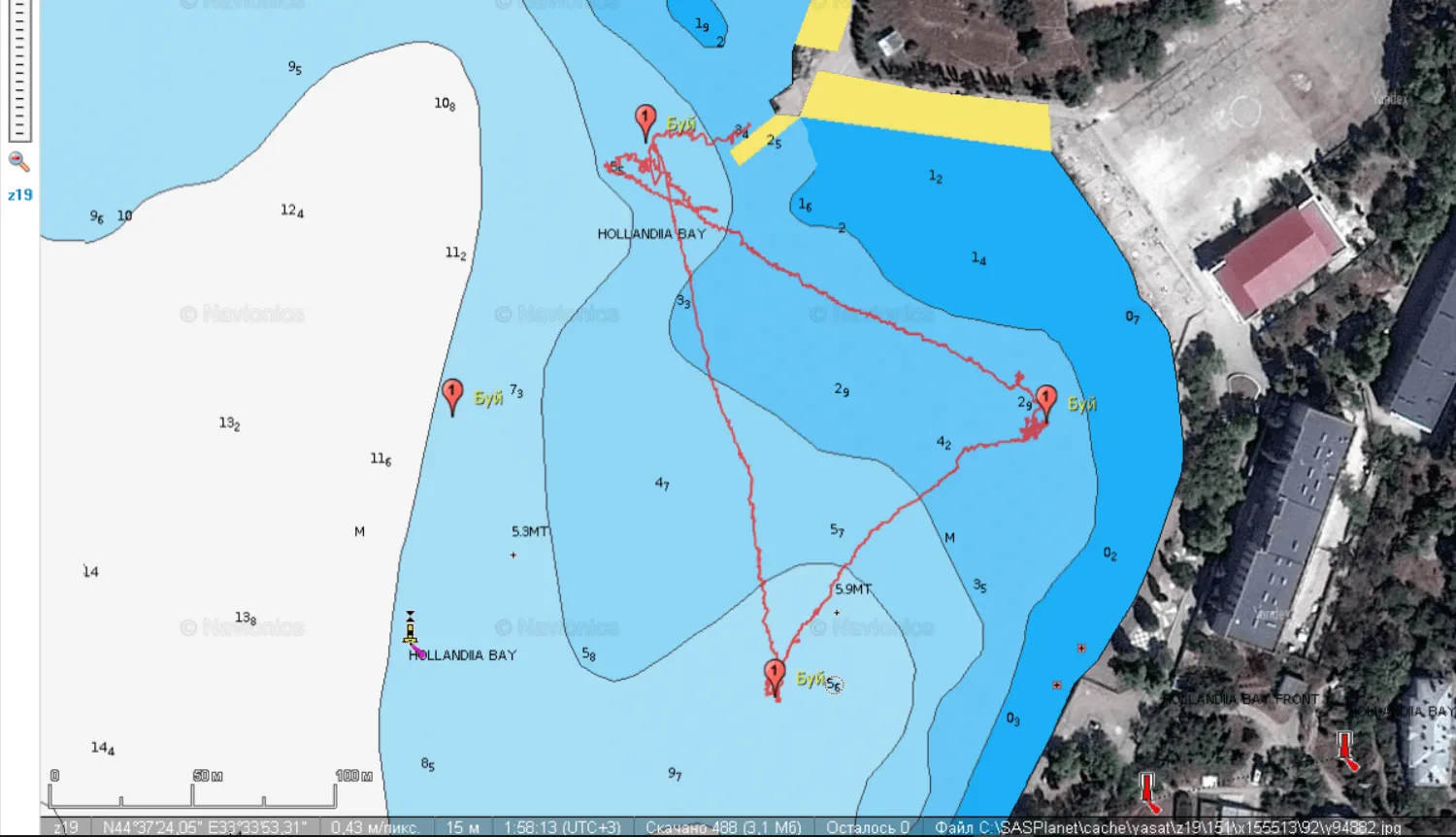
The photo above shows part of the track; here is the whole track:
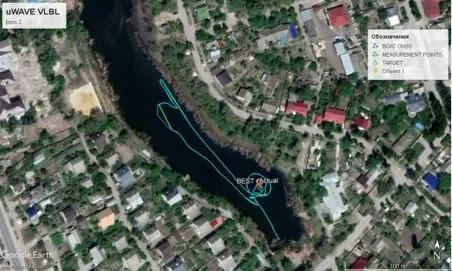
Green shows the measurement track — the points where the distance to the responder was measured; where it lags behind the blue line, the acoustic link was lost. This was caused by poor hydrological conditions.
In both cases we got a deviation from the beacon's actual position of around 70–90 cm.
Screenshot from the host application:
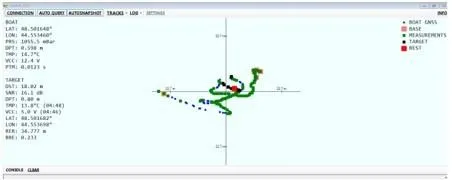
The modem on the boat is powered by a lead-acid battery; its voltage, along with the depth and propagation time, are shown in the top left. The modem's submersion depth is 80 cm. Water temperature is 14.7 °C according to the interrogator and 13.8 °C according to the responder.
For the future development of this device line, we plan to make:
- A direction-finding antenna for use with uWave (providing both bearing and data transfer);
- A long-baseline system. Firmware is already ready for a long-baseline system in which the uWave modem acts as a pinger, with its position determined using four small buoys.