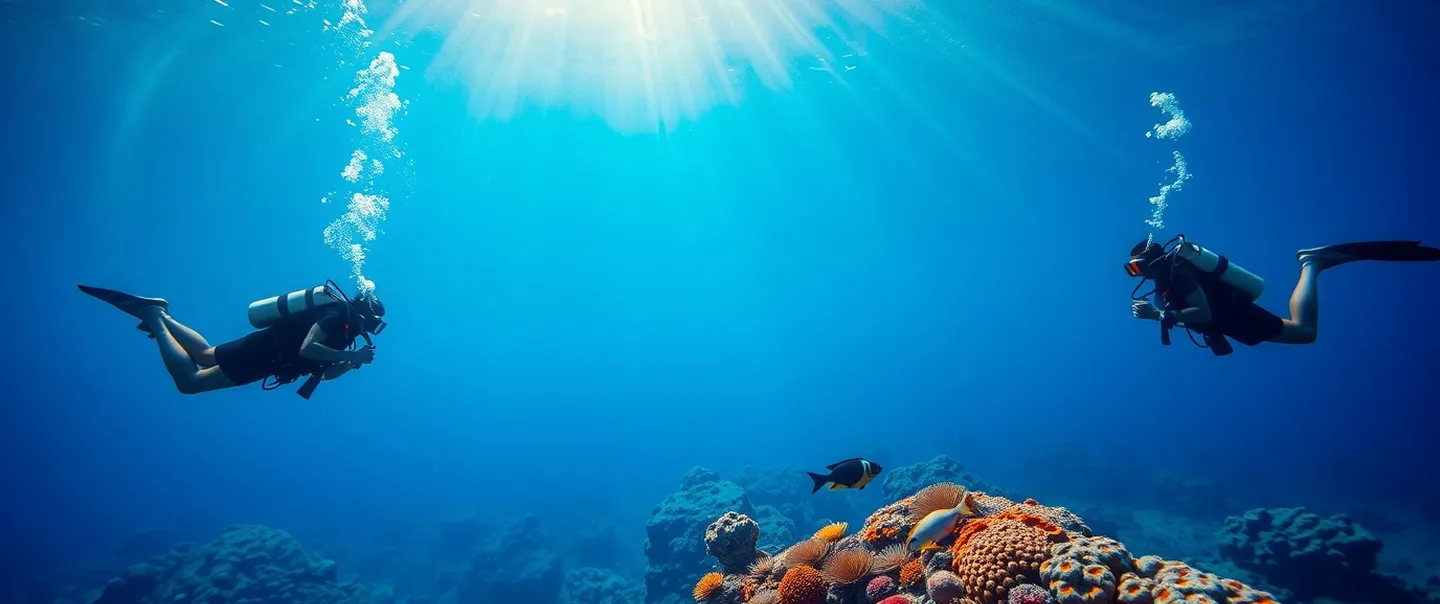
Divers communicate in three ways: hand signals and agreed cues, a cable link, or a wireless acoustic channel. Signals need no equipment, but they only work in sight. A cable gives reliable speech for surface-supplied diving. A wireless diver communication system lets a diver talk to the dive supervisor without a tether, and according to the RedPhone datasheet, at distances of up to 1,000 m. The right choice depends on the type of work, the depth, the visibility and the number of people involved.
Hand signals and agreed cues
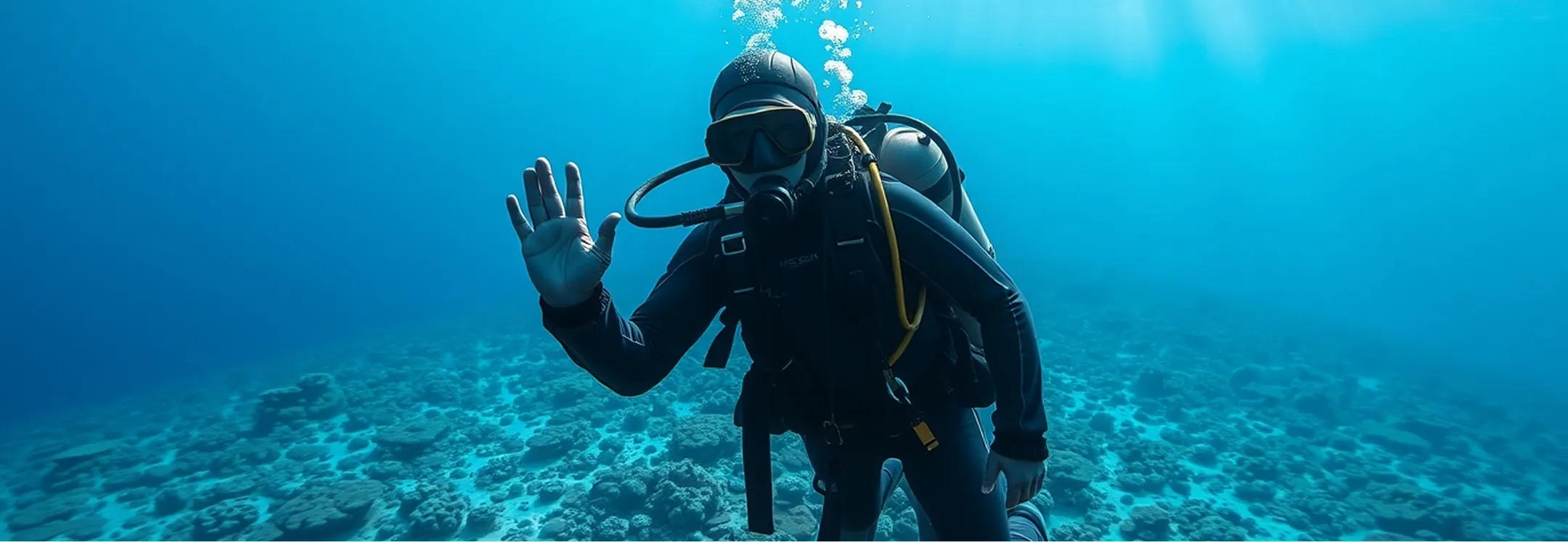
The simplest way is the standard hand signals: "OK", "ascend", "low on air", "stop". They are supplemented by an underwater slate, a torch and tapping on a cylinder to attract attention. Divers working on a signal line agree on what the tugs mean: their number and pattern replace words, and the supervisor feels them by hand even when the diver is out of sight. The meaning of these signals, and what to do when they stop, must be agreed at the briefing before the dive.
The method has three limitations. You must see your partner, and in turbid water visibility can shrink to a few meters. Your hands must be free, which they are not when you are working with a tool. And the vocabulary is limited: a complex message cannot be sent with gestures. That is why signals remain the basic and backup channel even where technical communication is available.
Wired communication
In surface-supplied diving, a communication line is part of the umbilical. The diver has a microphone and earphones in the helmet or full-face mask, and the supervisor has a control panel. Speech travels along the cable, so it is clear and independent of noise and echo, and the diver's hands stay free. The supervisor can give an instruction at any moment, hear the diver's voice and breathing and assess their condition, and the conversation can be recorded if necessary. That is why wired communication remains the main channel for underwater engineering work with surface-supplied air.
The price is the tether. The cable limits maneuvering, increases the risk of snagging, and the working range is set by the length of the umbilical. Wired communication is not acoustic, but it is the one wireless systems are most often compared with.
Wireless acoustic communication
How it works
Radio waves do not travel through water, so speech is carried by sound (the physics is covered in Underwater acoustic communication: how data travels underwater). The microphone turns the voice into an electrical signal, which modulates an ultrasonic carrier, and the transducer sends it into the water. In RedPhone systems, eight voice channels use carrier frequencies from 25 to 32.8 kHz and a voice band of 300–4300 Hz (according to the documentation at docs.unavlab.com).
Push-to-Talk mode is used: the diver listens all the time and transmits while the button is pressed. Channels let several teams work in the same water area. The link is half-duplex: while one person talks, the others listen. Sound propagation delay adds to this: at 500 m it is about 0.33 s, so a pause before a reply on an underwater link is normal, not a sign of a fault. Systems from different manufacturers can be compatible if the standard frequency bands match: RedPhone devices are stated to be compatible with most analogs, including OTS and Ocean Reef.
What affects range and intelligibility
The rated range is a maximum under favorable conditions. In real life the link is affected by:
- noise: exhaled bubbles, the regulator, boat propellers, running machinery;
- shallow depth: near the surface the echo is especially strong, and according to a customer who tested our modems in Lake Geneva, with the modems submerged 20–30 cm the link did not exceed 20–25 m, while at 1.5–2 m it was noticeably better (details);
- reflections from the bottom, the surface and structures, which turn speech into mush;
- water layers of different temperatures that bend the sound rays;
- obstacles between the transducers: a ship's hull, rocks, a wreck, the diver's own body;
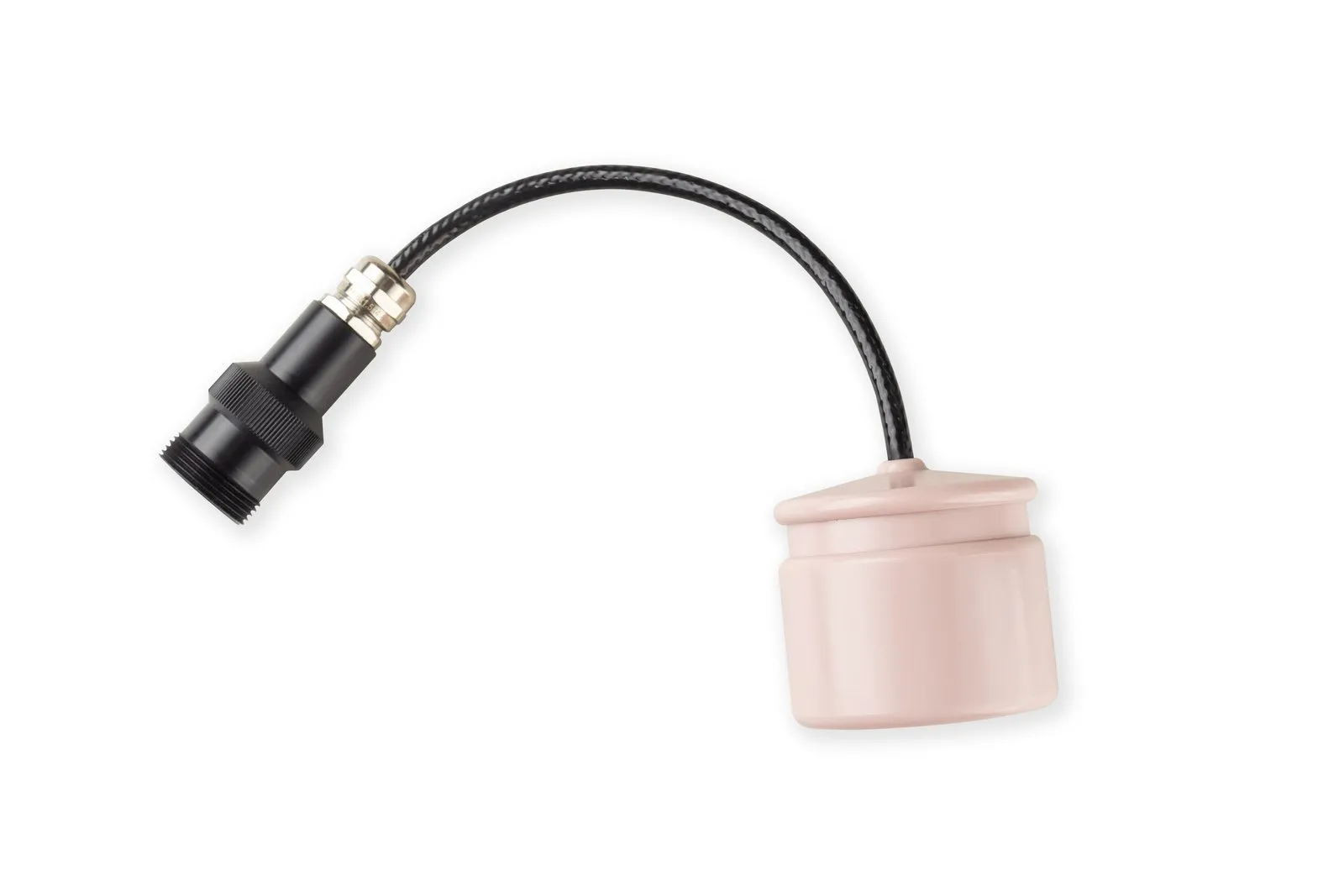
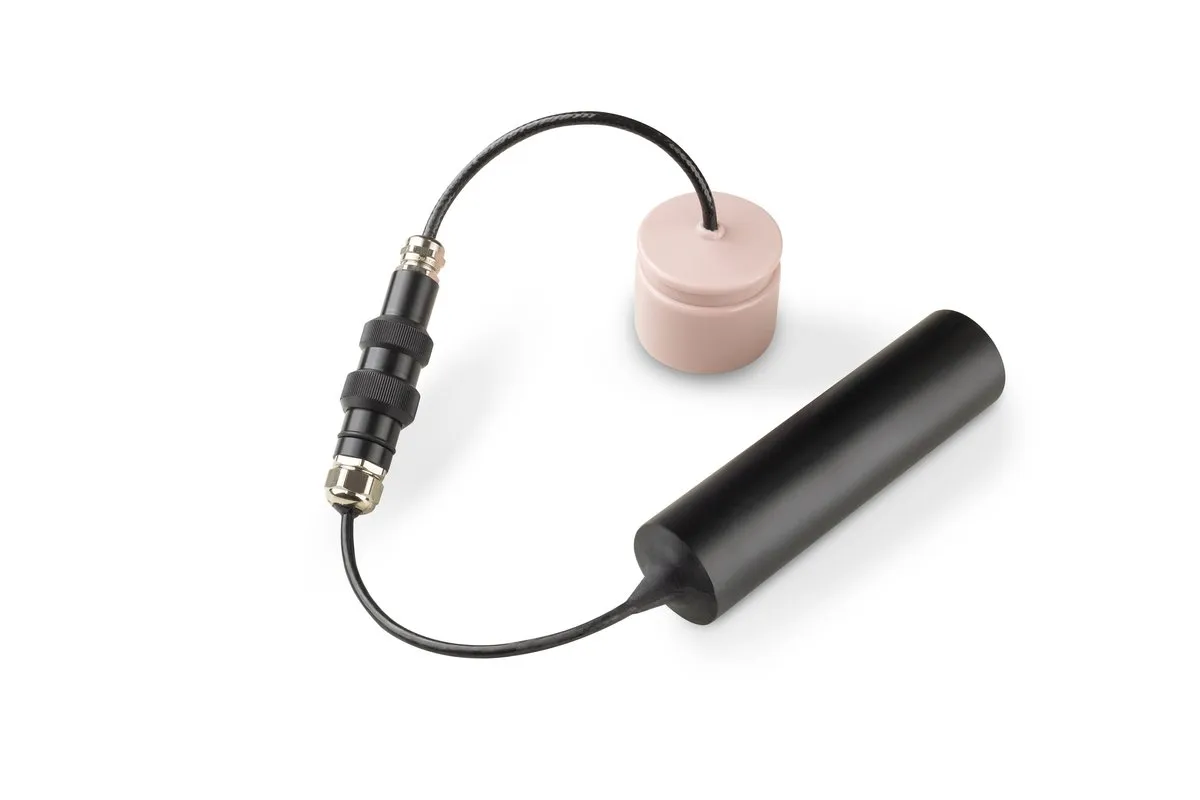
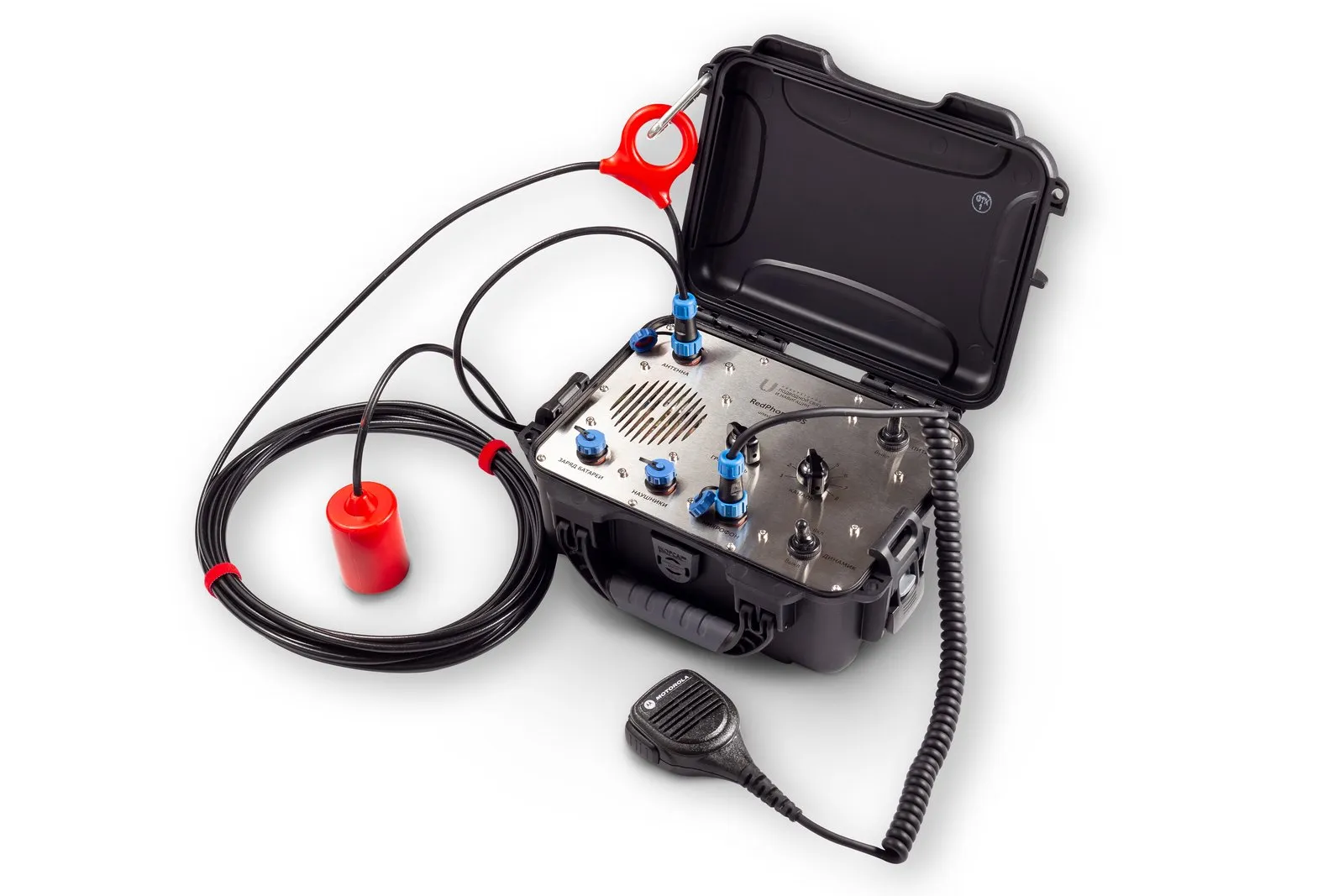
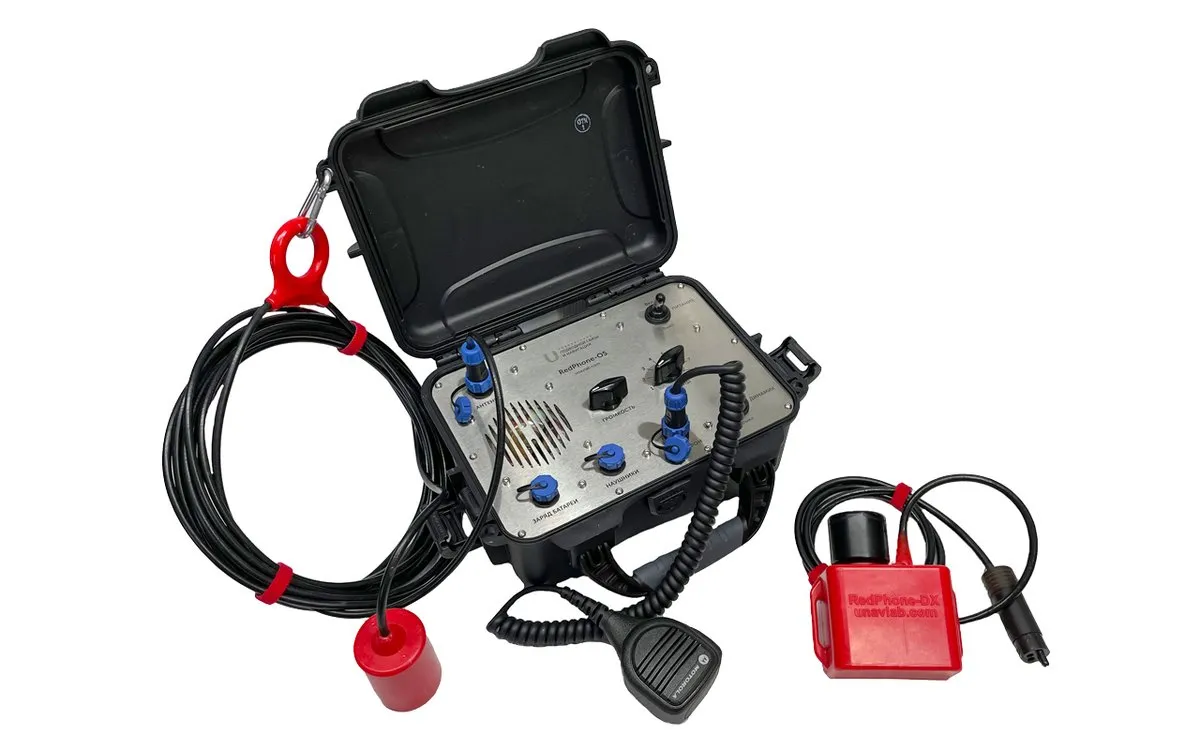
- transducer position: the surface transducer (for RedPhone-OS it is on a 7 m cable) is lowered into the water away from the ship's hull and noise sources.
The RedPhone system
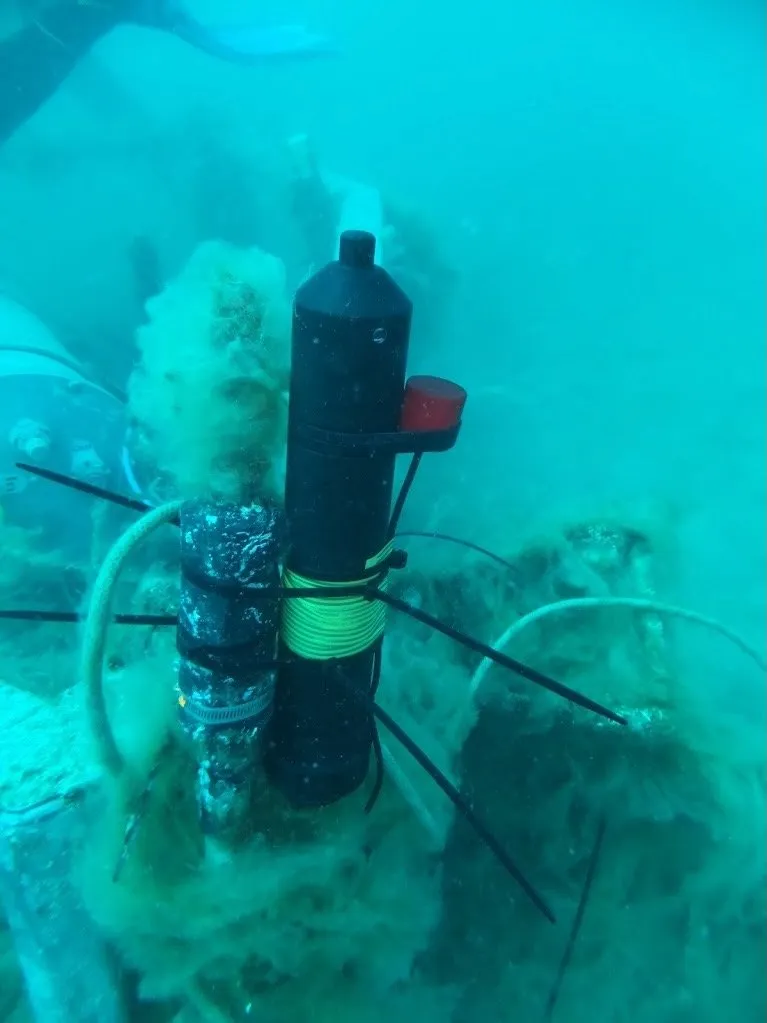
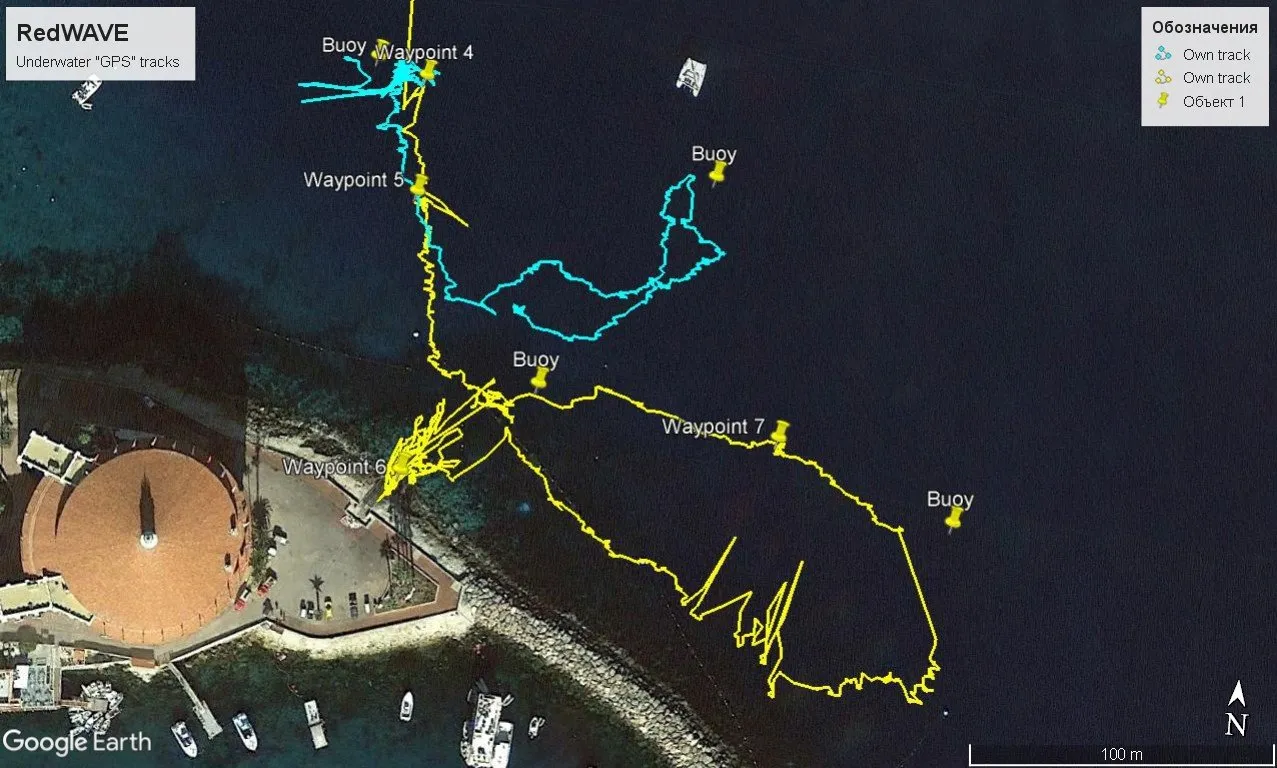
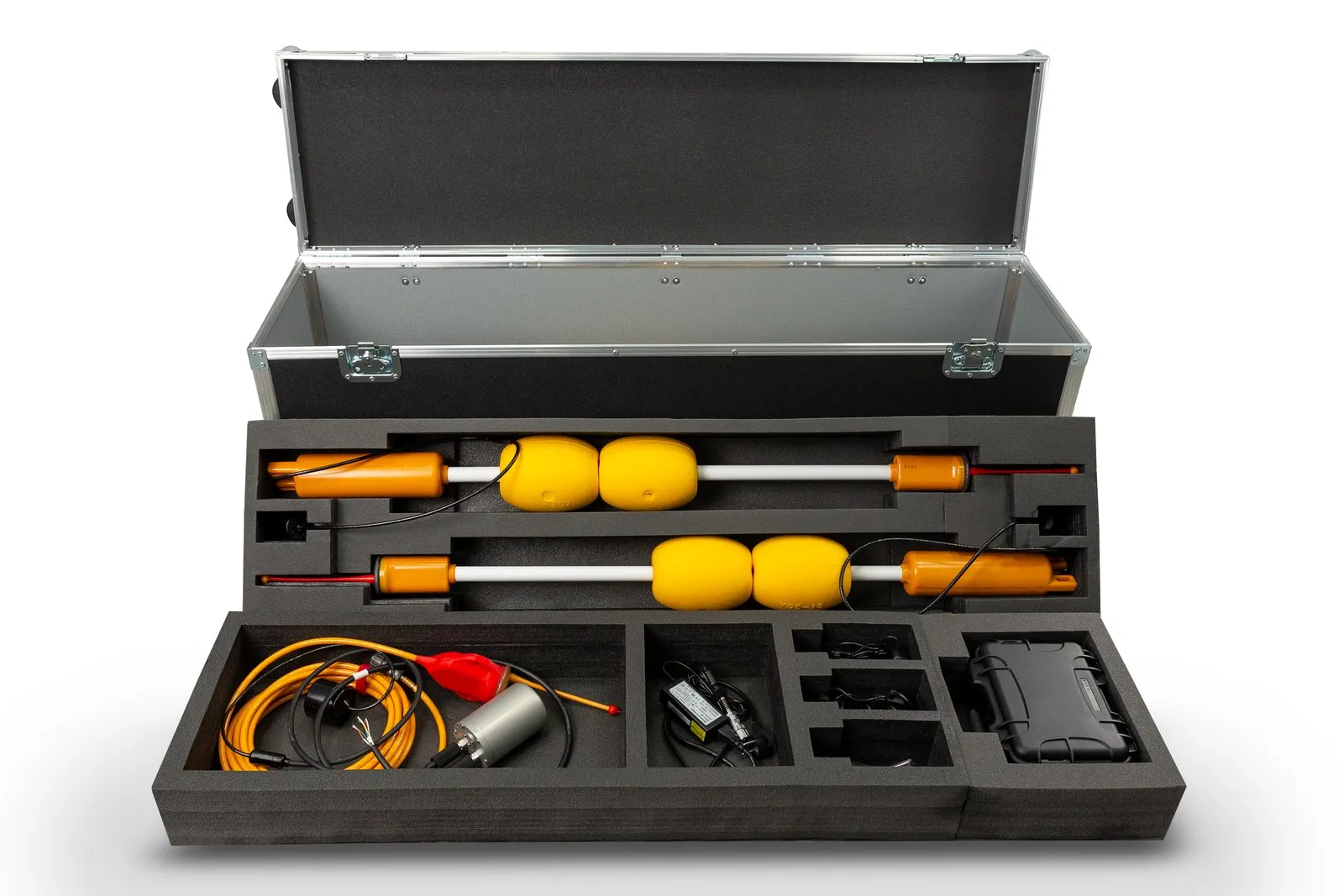
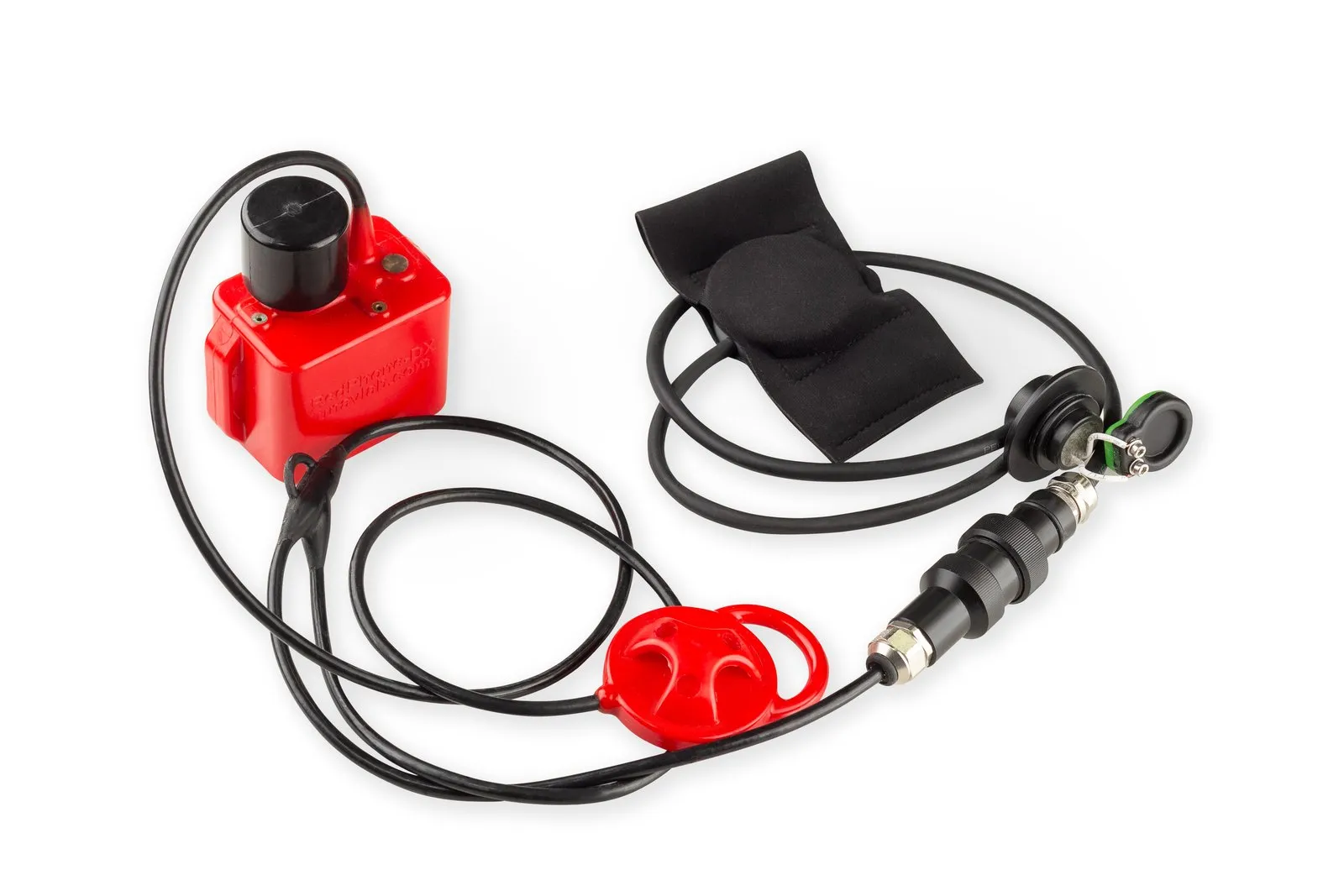
The RedPhone system consists of the RedPhone-OS surface station and RedPhone-DX diver units. The diver's unit switches on automatically when submerged, its housing has no openable parts, and the built-in voice detector works as an automatic squelch. After every voice transmission the unit sends a navigation signal: if an RWLT navigation system is deployed, the dive supervisor sees the diver's position (the system shows up to 255 divers).
| Parameter | RedPhone-DX (diver) | RedPhone-OS (surface) |
|---|---|---|
| Dimensions | 106 × 95 × 55 mm | 259 × 202 × 115 mm |
| Weight | 0.6 kg | 2 kg |
| Communication range | up to 1,000 m | up to 1,000 m |
| Channels | 8 | 8 |
| Operating time, receive | up to 20 h | up to 30 h |
| Mixed mode, 20% transmit | up to 8 h | up to 24 h |
| Mixed mode, 50% transmit | up to 2.5 h | up to 12 h |
| Depth / enclosure | up to 100 m | IP67, impact-resistant case |
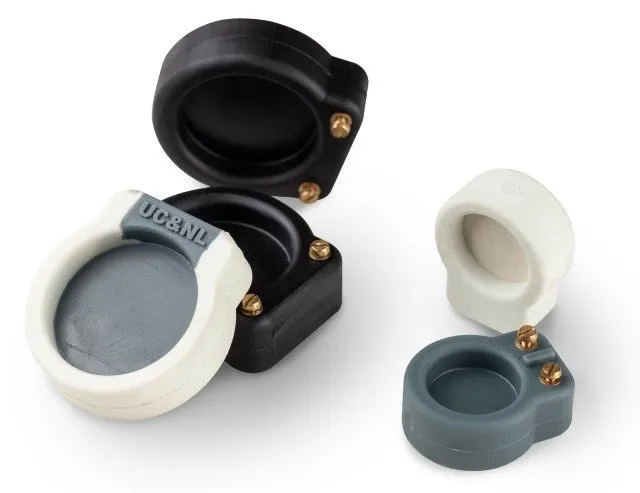
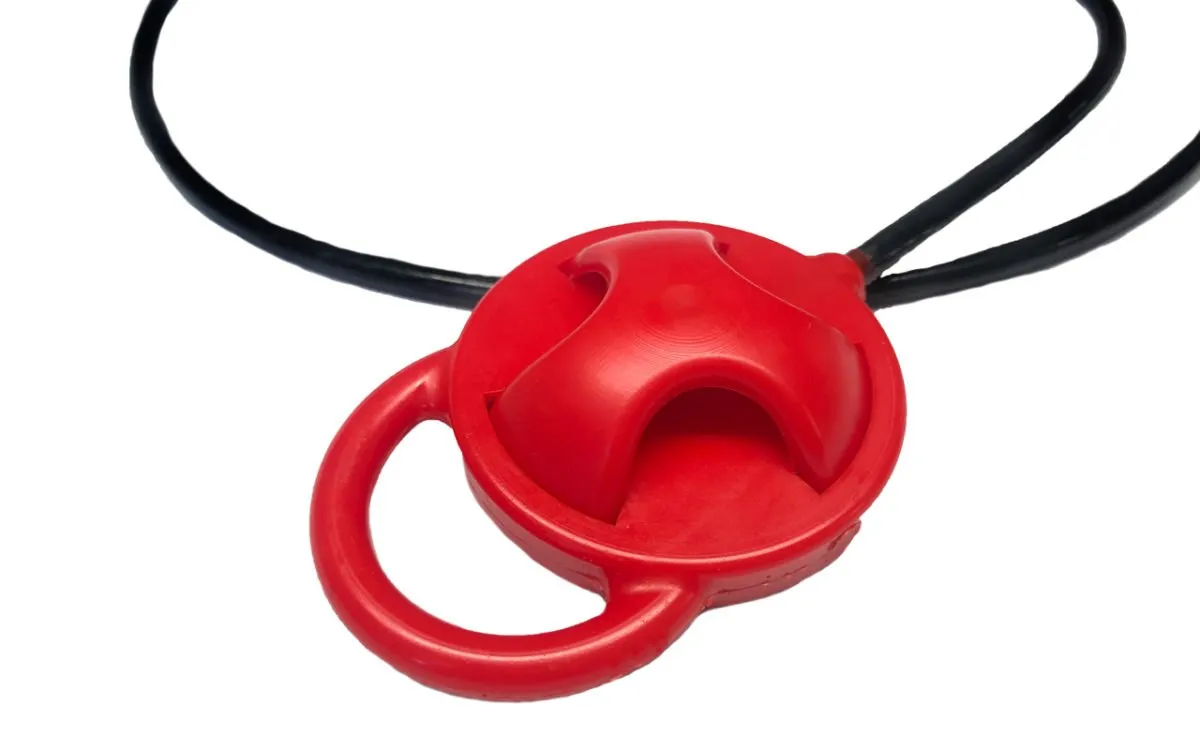
uSpeak microphones are encapsulated in polyurethane compound and have no enclosed air cavities, so they withstand any diving and surfacing mode; they connect via a bronze M2 threaded joint, like most analogs, and can replace DEMSh (a Russian helmet microphone type) and OTS HotMic microphones. The uPress push-to-talk button weighs 55 g and can be pressed with any part of the palm; it is included with RedPhone.
How to talk over an underwater link
A few simple rules improve intelligibility and safety:
- check the link at the surface and right after descending, before work begins;
- keep it short, one thought per transmission, and name yourself and the person you are calling;
- press the button before you start the phrase and release it after you finish, otherwise the beginning or end is lost;
- if reception is poor, change position: often it is enough to move away from a noisy object or rise a couple of meters;
- acknowledge important instructions and repeat numbers;
- do not rely on voice alone: hand signals remain the fallback channel.
Comparison of the options
| Method | Range | What you need | Limitations |
|---|---|---|---|
| Hand signals and cues | within visibility | agreements, slate, torch | visibility, free hands, small vocabulary |
| Wired communication | length of the umbilical | surface-supplied equipment, control panel | tether, risk of snagging |
| Wireless acoustic | up to 1,000 m (RedPhone, per datasheet) | units for the diver and the surface | noise, bubbles, echo, water layers |
How to choose
- Recreational group dive with an instructor: signals, a slate and a torch are enough; a wireless link is useful for the group leader to warn everyone at once.
- Surface-supplied work: wired communication as the main channel, with hand signals and the signal line as a backup.
- Search, underwater engineering work, a large water area, several teams or free-swimming divers: wireless communication. It does not restrict maneuvering and lets you assign teams to separate channels.
- When you need to see the diver's position: RedPhone-DX together with the RWLT system.
Any equipment can fail, so agree in advance on hand signals and on what to do if communication is lost.
UCNL equipment
The Underwater Communication and Navigation Laboratory makes all the elements of a wireless diver voice communication system, including microphones and buttons:
- RedPhone: a kit of a surface station and a diver's unit with a headset;
- RedPhone-DX: the diver's telephone unit with a positioning function;
- RedPhone-OS: the surface station in an impact-resistant case;
- uSpeak and uPress: the microphone and the push-to-talk button.
All diver communication devices are collected in the Telephony section. If you need data rather than voice, read How to choose an underwater acoustic modem.