Underwater acoustic communication is the transmission of information through water using sound. Radio waves die out within centimeters, light scatters within tens of meters, but sound can travel for kilometers. The price is a low data rate (from tens of bits per second over kilometers to tens of kilobits per second over hundreds of meters), a delay of about 0.67 s for every kilometer, and a difficult medium in which the signal arrives with echoes and distortion. Below we explain how it works and why a hydroacoustic modem is nothing like a Wi-Fi adapter.
Why radio does not work underwater
Seawater conducts electricity (about 4 S/m), so an electromagnetic wave in it quickly turns into heat. Wi-Fi, Bluetooth and GNSS signals are absorbed almost completely within centimeters to decimeters: a GNSS receiver cannot see satellites underwater, and a radio modem cannot reach the neighboring vehicle. Extremely low frequencies penetrate tens of meters, but they need enormous antennas and deliver only a few characters per minute. Light travels tens of meters in clear water, but only along a line of sight, and just a few meters in turbid water.
| Medium | Range in water | Data rate | Main limitation |
|---|---|---|---|
| Radio (MHz–GHz) | centimeters to decimeters | irrelevant | almost complete absorption |
| Extremely low frequency radio | tens of meters | a few characters per minute | huge antennas |
| Optical (blue-green light) | up to tens of meters in clear water | up to Mbit/s over short distances | line of sight, turbidity |
| Sound | hundreds of meters to tens of kilometers | tens of bit/s to tens of kbit/s | delay, echoes, noise |
How sound behaves in water
Speed of sound and delay
Sound travels through water at about 1,500 m/s: more than four times faster than in air, but 200,000 times slower than radio waves. It covers a kilometer in 0.67 s, so a request-and-reply exchange over that distance takes more than 1.3 s. This is why underwater protocols avoid frequent acknowledgments, and why modems behave more like a postal service than a telephone.
The speed of sound depends on temperature (about 3 m/s per degree), salinity (about 1.3 m/s per 1 ‰) and depth (about 1.7 m/s per 100 m). That matters for more than delay. Sound always bends toward the lower speed, so in summer, when the upper layer is warm and the lower layer is cold, rays curve downward and "shadow zones" appear between modems at different depths. Sound ray paths are explained in detail in the Habr article Where do rays go underwater? (in Russian).
Attenuation
A signal weakens for two reasons. The first is geometric: the energy spreads over an ever-larger sphere, so at 1 km the signal is 60 dB weaker than at 1 m, and at 10 km it is 80 dB weaker. The second is absorption by the water, which grows quickly with frequency. In seawater, viscous friction is joined by chemical relaxation of magnesium sulfate and boric acid, which is why sound attenuates noticeably less in fresh water.
| Frequency | Absorption in seawater (Thorp empirical formula) |
|---|---|
| 1 kHz | about 0.07 dB/km |
| 10 kHz | about 1 dB/km |
| 20 kHz | about 4 dB/km |
| 100 kHz | about 30–35 dB/km |
The rule that follows: the farther you need to go, the lower the frequency and the narrower the bandwidth, and therefore the lower the data rate. Long-range modems work at a few to a few tens of kilohertz; for example, RedLine uses the 5–15 kHz band. Real losses are often higher than calculated because bubbles, plankton, fish and bottom irregularities scatter the sound. The physics of absorption is covered in the Habr article Why does sound attenuate in water? (in Russian).
Noise
The useful signal has to be picked out from the noise of waves, rain, ships, marine life and the carrier's own machinery: propellers, thrusters and pumps. That is why a modem transducer is usually placed away from noise sources, and why signals are designed so that the receiver can recover them at a signal-to-noise ratio near zero. According to the specifications, uWave family modems are designed for a signal-to-noise ratio of −2 dB (a value obtained in a static laboratory experiment without multipath), and RedLine for −6 dB.
Multipath
Sound reflects from the surface and the bottom, and the echo arrives later than the direct signal: a path difference of 15 m means a 10 ms delay. Echoes overlap the following symbols and corrupt reception. It is worst in shallow water and in enclosed volumes such as test tanks, and best in deep water with a line of sight between the transducers.
Multipath is fought with guard intervals (which reduce the data rate), wideband signals with correlation reception, adaptive equalizers and error-correcting codes. A vivid example from our lab: in a 3 × 1.5 × 1.5 m metal tank, two RedLine modems work reliably only within 2 m, and two uWave modems within about 1 m, although in open water they are rated for 8,000 m and 1,000 m. The homemade modem from the Habr article Making a simple hydroacoustic modem (in Russian) needed a longer guard interval in the same tank, and its data rate dropped from 16.6 to about 3 bit/s. And a customer from Switzerland who tested uWave modems in Lake Geneva reported that with the modems submerged only 20–30 cm the link did not exceed 20–25 m, while at 1.5–2 m the range was much greater (see the customer review).
The Doppler effect
When modems move relative to each other, the signal frequency shifts: at 1 m/s and a 20 kHz carrier the shift is about 13 Hz. For phase modulation that is a serious problem, so datasheets specify the permitted relative speed. For uWave Max, uWave Max OEM and uWave USBL it is ±1 m/s; for RedLine and RedGTR it is ±3 m/s (according to the documentation at docs.unavlab.com).
Data rate and range: why it is a trade-off
The data rate is limited by two things: the available frequency band and the signal-to-noise ratio at the receiver input. The longer the path, the stronger the attenuation at high frequencies, the narrower the usable band and the lower the rate. That is why modem datasheets always give range and data rate as a pair, and why the figures are quoted for optimal conditions.
Examples from our range:
- uWave: up to 1,000 m at 78 bit/s;
- uWave Max: up to 3,000 m in the 78 bit/s mode, with 156, 314 and 634 bit/s modes also available (they are mutually incompatible and are switched by replacing the firmware);
- RedLine: up to 8,000 m at 80 bit/s.
Is that a lot or a little? A 64-byte packet at 78 bit/s takes about 7 seconds, not counting overhead. That is enough for coordinates, depth, control commands and sensor telemetry, but not for video or files. Modems from other manufacturers advertise, under optimal conditions, data rates of up to 10–14 kbit/s at distances of 1–4 km; a comparison based on published data is given in the article How to choose an underwater acoustic modem.
Modulation in brief
Modulation is a way of writing bits into the parameters of an acoustic signal. There is no universally best option: the choice depends on whether range, speed or robustness matters most.
- Frequency-shift keying (FSK). Bits are encoded in the frequency of a tone. It is simple and robust, but slow. The frequency-hopping variant (FH-FSK) handles echoes well; Popoto, for example, uses it for its 80 bit/s mode.
- Phase-shift keying (PSK, QAM). Bits are encoded in the signal phase. For the same bandwidth the data rate is higher, but the receiver must be coherent, with an adaptive equalizer and Doppler tracking. A typical choice for fast links over short distances.
- OFDM. Data is spread over many narrow subcarriers. It tolerates multipath well but is sensitive to Doppler shifts.
- Wideband and noise-like signals. The energy is spread over a wide band, and the receiver collects it by correlation. This makes it possible to operate at a low signal-to-noise ratio, to tell echoes apart and to separate users by code. The class includes linear-frequency-modulated (chirp) signals and EvoLogics S2C (Sweep-Spread Carrier) technology. Wideband signals and digital signal processing also underlie our own systems.
- Coding and retransmission. Redundant codes correct some of the errors, and protocols such as ALO (At-least-once) resend a packet until a delivery acknowledgment arrives. The uWave family supports this mode and up to 254 logical addresses.
How modems share the channel and build networks
A modem on the seabed and a modem on a buoy form the simplest point-to-point link. With many nodes you must decide who speaks and when. Nodes can be separated by frequency, by time or by code, and a network can be built on polling by a master node. Code division lets several modems work at the same time in one water area: uWave provides up to 20 code channels for this.
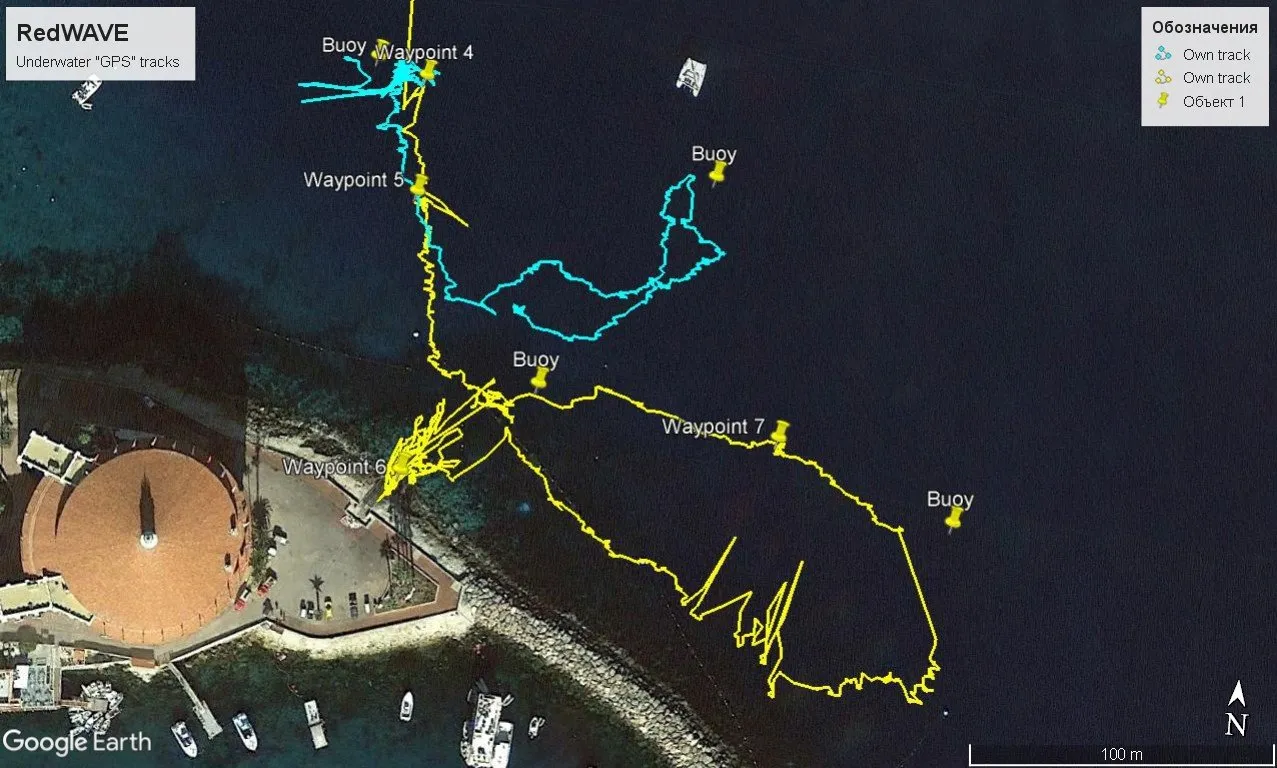
Communication has a useful by-product: ranging. A modem measures the signal propagation time, and the distance is that time multiplied by the speed of sound. The time resolution of uWave Max modems is 0.0001 s, which is 0.15 m in range at a sound speed of 1,500 m/s. If the receiver also measures the signal's angle of arrival, like uWave USBL, the result is an ultra-short baseline (USBL) navigation system. Positioning principles are covered in Underwater navigation: how USBL, LBL and iLBL work and how they differ.
The Internet of Underwater Things
The Internet of Underwater Things (IoUT) is a network of underwater sensors, vehicles and actuators connected to the ordinary internet through surface gateways. The acoustic channel serves as the bridge: nodes send small batches of telemetry infrequently, run on batteries for months and cannot afford frequent retransmissions.
The main difficulties are delay, low data rate, packet collisions when several nodes transmit at once, and energy consumption. The typical "everyone talks to everyone" architecture with long chains of repeaters makes these problems worse: at every hop the probability of error and the delay grow.
We took a different approach. The dual-medium access point consists of a surface unit, which connects to the internet and receives GNSS signals, and an underwater unit, which exchanges data with the nodes and determines their positions. The access point runs the network: nodes transmit only on its command, so there are no collisions even with a large number of nodes. The "many-to-one" protocol and a range of up to 8 km (depending on the version) make repeaters unnecessary, and guaranteed delivery is implemented at the device level. Our overview of applications also describes a system with the proprietary Hadean protocol: up to 256 dynamically addressed telemetry nodes, plus actuator-control nodes (see Applications of our devices).
Where underwater acoustic communication is used
- Telemetry and remote control of autonomous and remotely operated underwater vehicles.
- Underwater sensor networks: environmental monitoring, hydrology, infrastructure inspection.
- Control of actuators and acoustic releases.
- Positioning of underwater objects.
- Voice communication with divers.
UCNL equipment
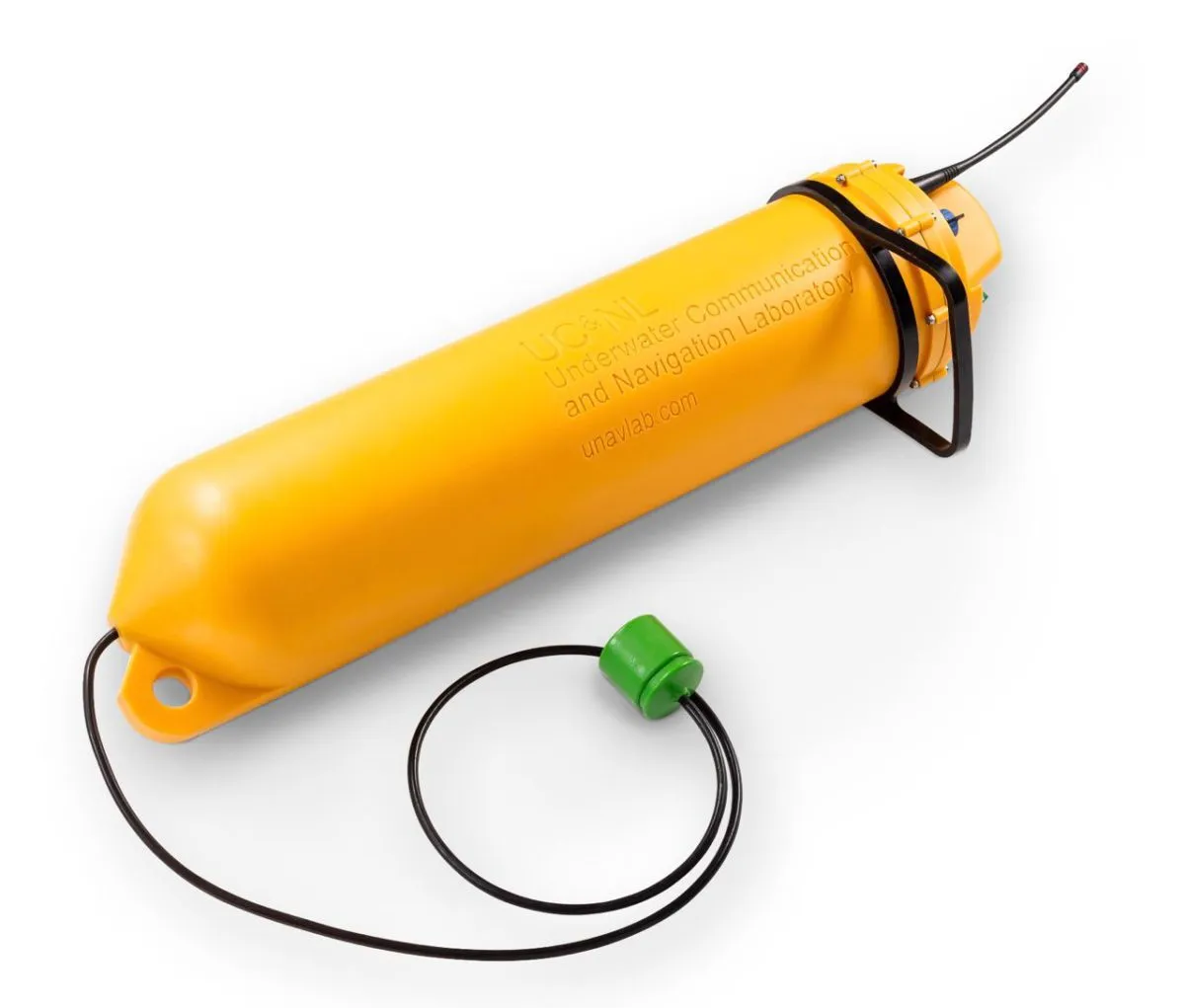
The Underwater Communication and Navigation Laboratory develops and manufactures hydroacoustic modems and communication systems. The modem catalog is on the Data transmission page, and diver communication is on the Telephony page.
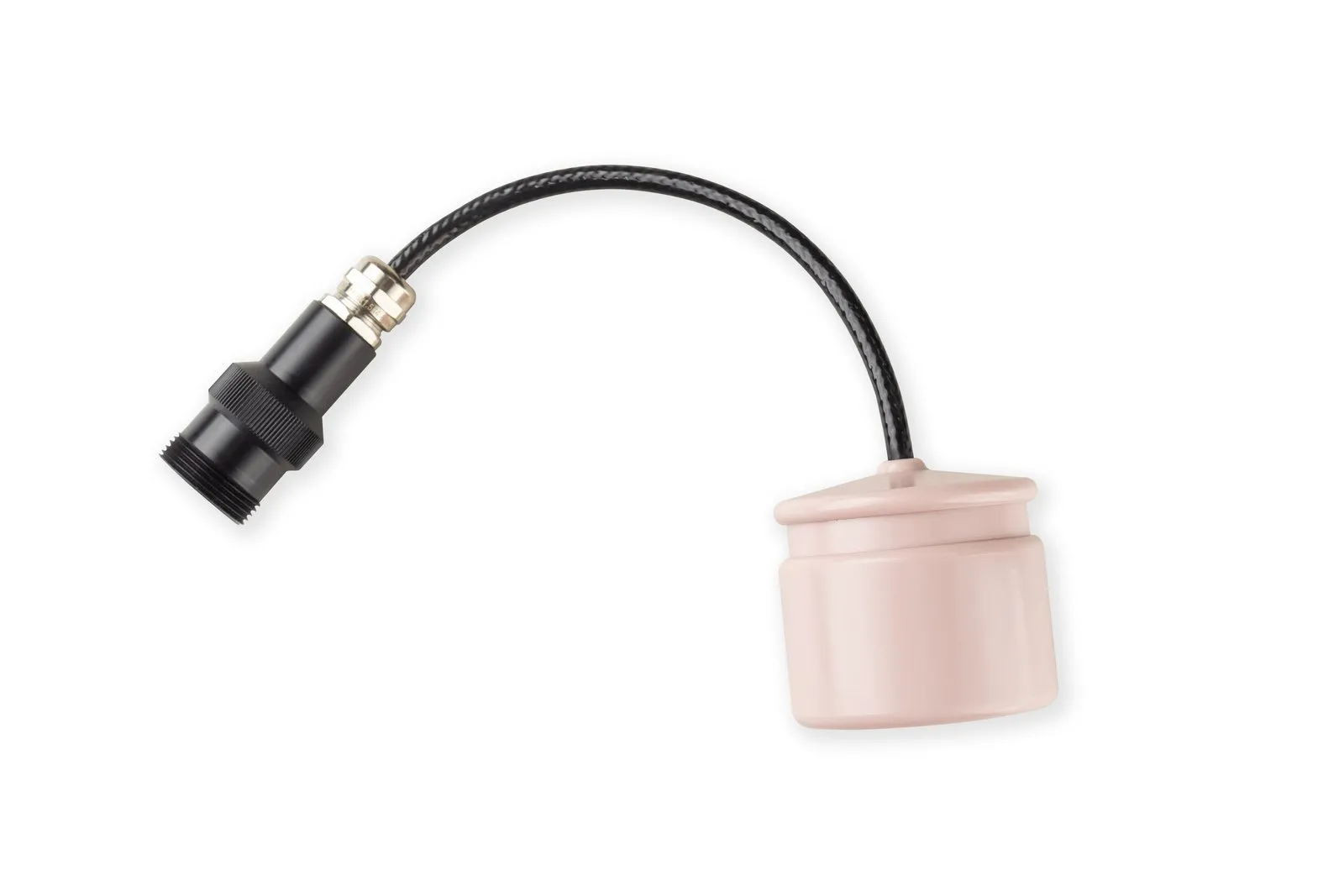
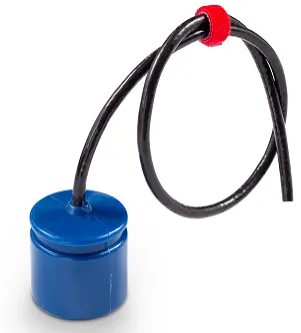
- uWave: a compact 41 × 45 mm modem weighing 0.16 kg, range up to 1,000 m, 78 bit/s; transparent channel and packet mode.
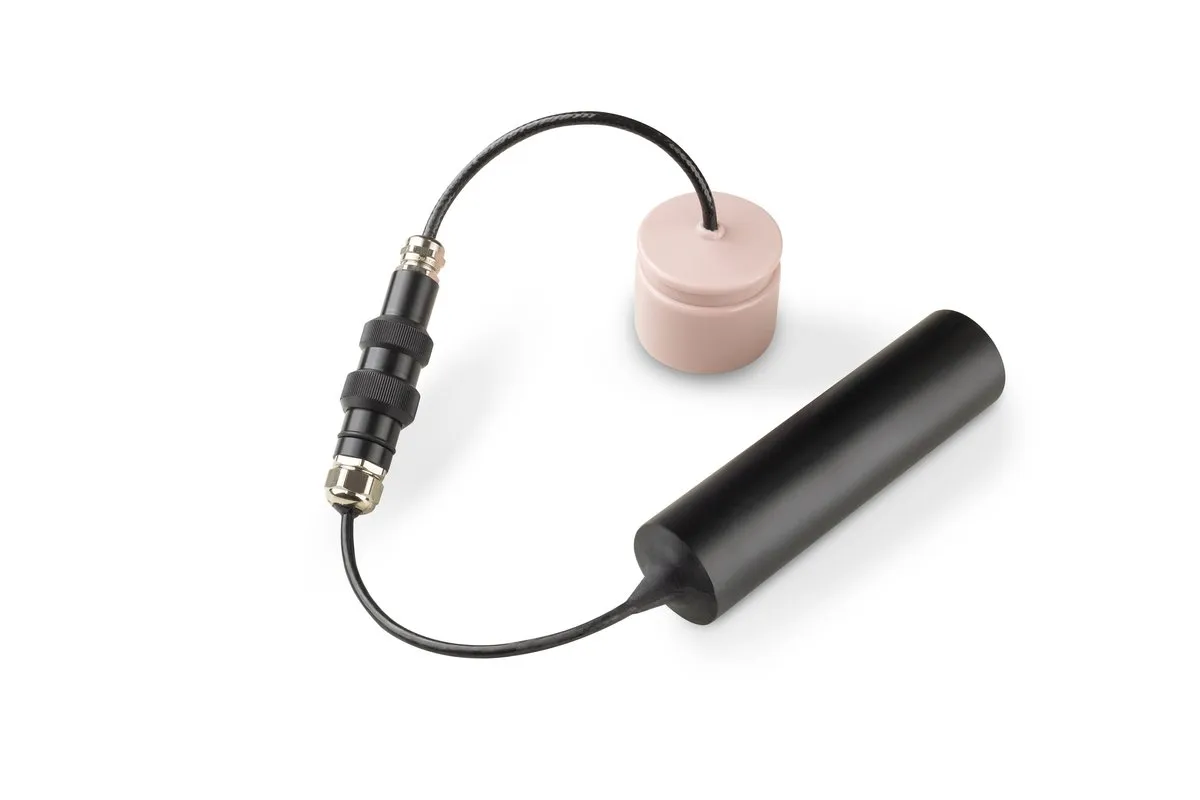
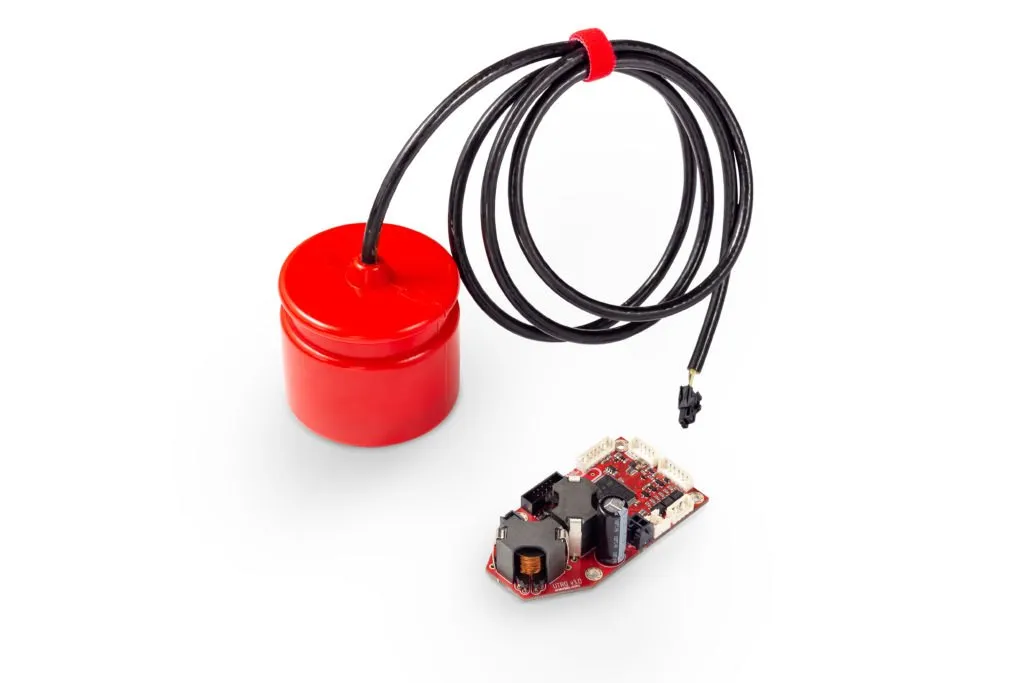
- uWave Max and uWave Max OEM: range up to 3,000 m, data rates up to 634 bit/s; the OEM version is supplied as a board and transducer for integration.
- uWave USBL: data transfer combined with distance and angle measurement.
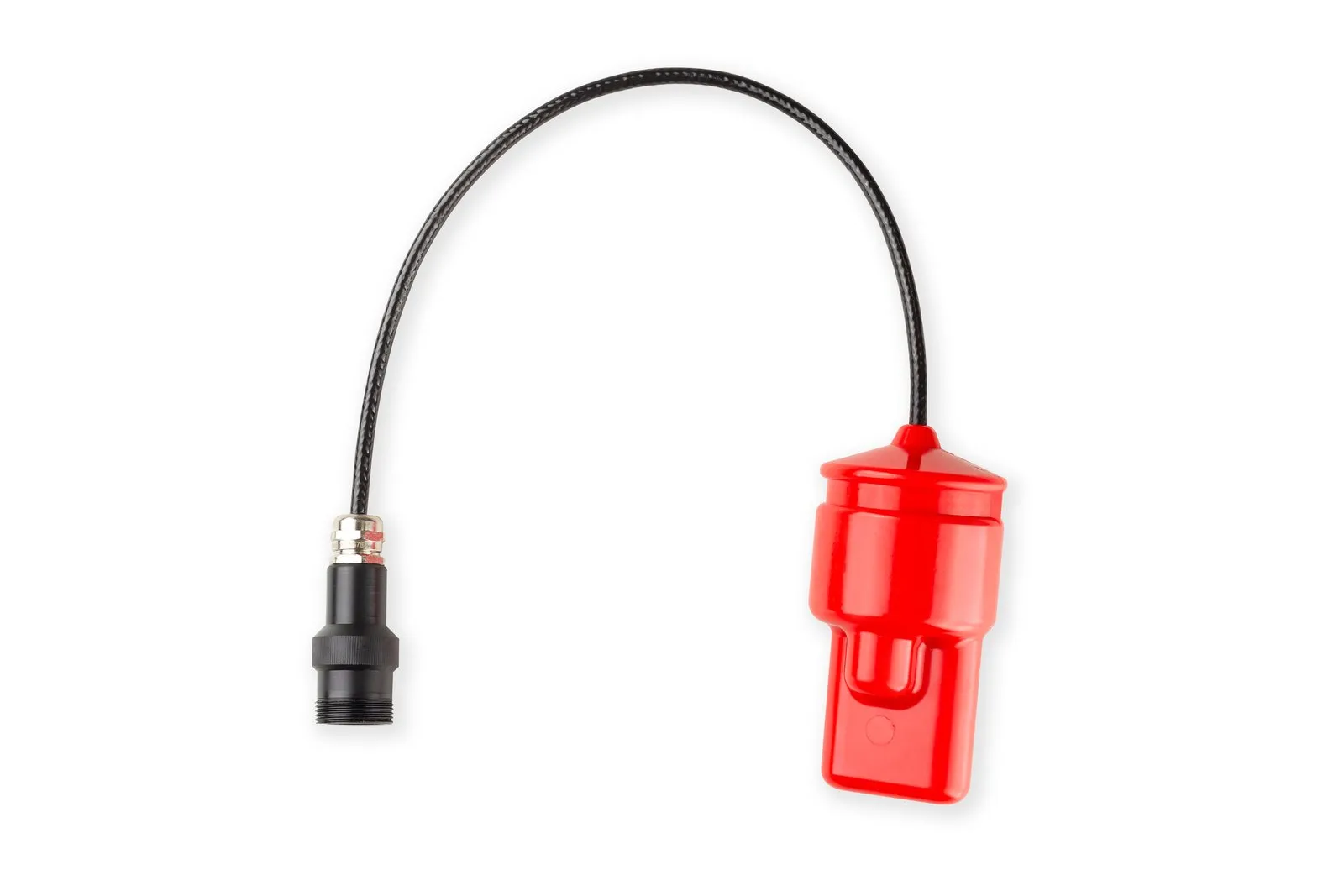
- RedLine: range up to 8,000 m at 80 bit/s, relay function.
- RedGTR: code commands for 25 subscribers, range up to 8,000 m.
- uSwitch: a simple solution for educational projects and prototypes.
- Dual-medium access point: the Internet of Underwater Things.
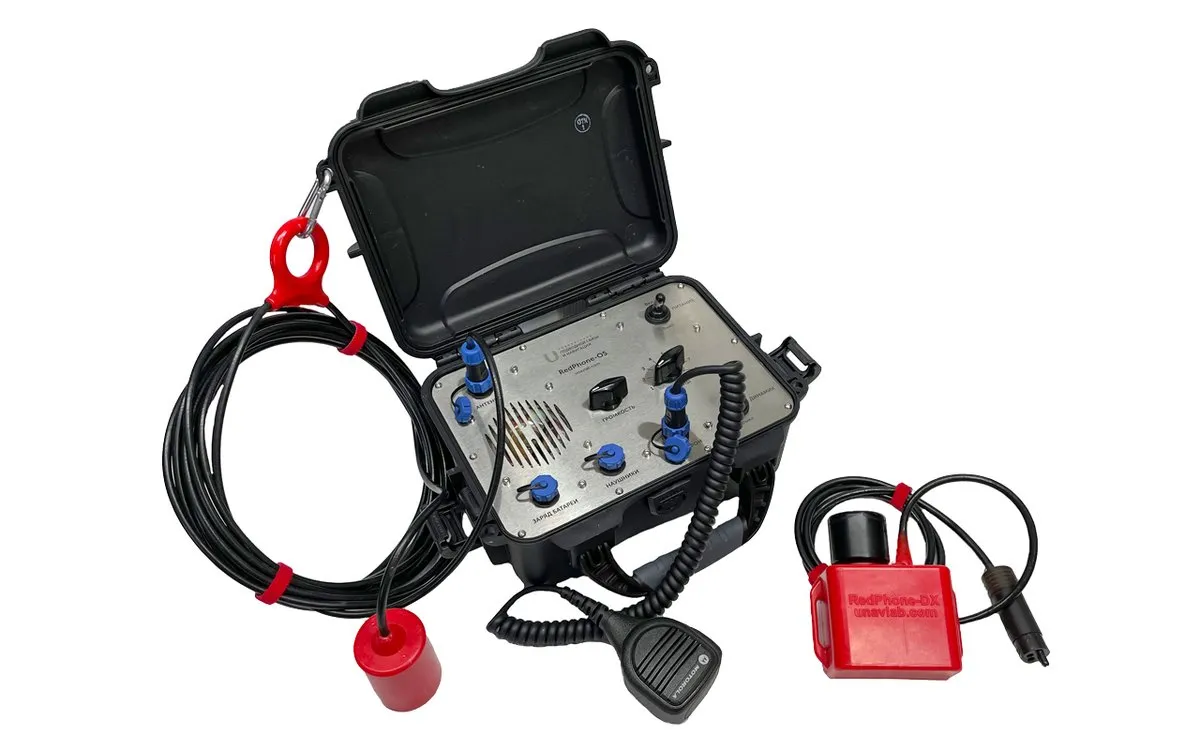
- RedPhone: voice communication for divers.
To choose a modem for your task, read How to choose an underwater acoustic modem. The story of the first uWave and its field trials is in The world's smallest hydroacoustic modem.
Sources and further reading: our team's articles on Habr (in Russian) — Why does sound attenuate in water?, Where do rays go underwater?, Making a simple hydroacoustic modem; documentation at docs.unavlab.com.